From Campaign Promises to City Hall: Mamdani’s First Year in Office
Charlize Patmon
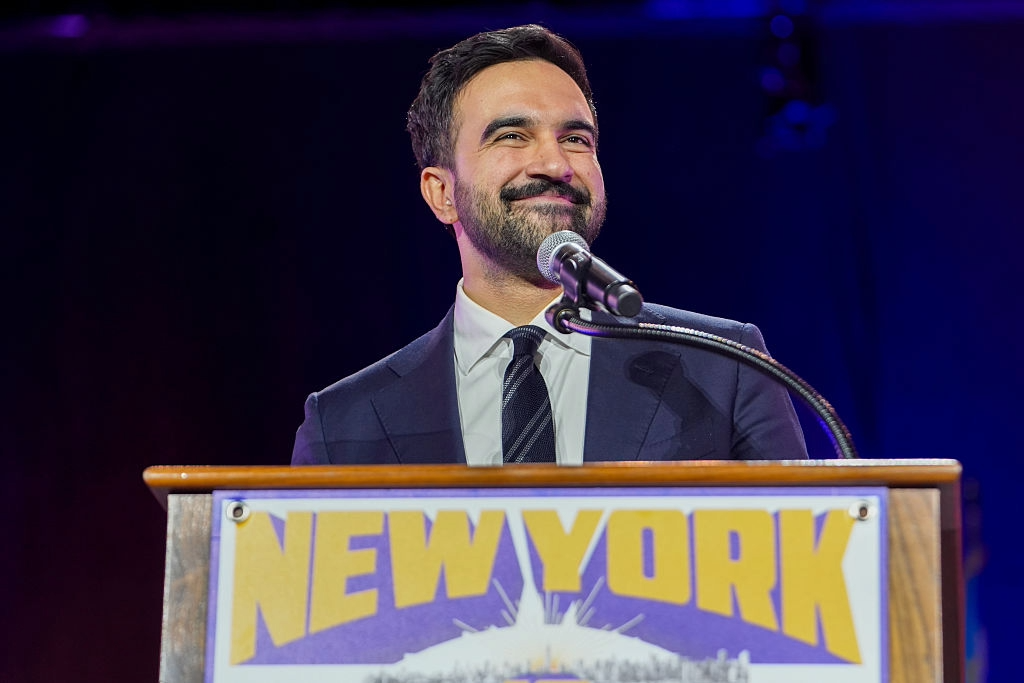
Photo Courtesy of Stephani Spindel/VIEWpress
From Kampala, Uganda to New York City. A progressive and representative of the people. Former state assemblyman and rapper under the moniker “Young Cardamom,” and now, the first Muslim mayor of NYC and youngest in the last century. Zohran Mamdani.
His unique background as a student organizer and housing counselor in Queens has shaped his progressive platform based on affordability for NYC residents and creating an accountable and transparent city government.
Mamdani garnered significant traction early in the 2025 NYC mayoral race with his major campaign promises — including free buses, rent control, universal childcare and small business retribution. The high-interest NYC Mayoral debates in Oct. 2025 allowed him to captivate audiences in NYC and across the country, leading to his landslide victory over opponents Andrew Cuomo and Curtis Sliwa. Mamdani’s election not only earned him a political title, but more importantly, established him as the first Muslim mayor of NYC.
As the end of his first year in office nears, Mamdani has made great legislative strides — particularly in affordability and addressing New York City’s fiscal situation. Mamdani entered his term with the legal responsibility to address and work to curb NYC’s previous budget gap of $12 billion. He has done so almost immediately with his proposed Executive Budget of $124.7 billion, with its main purpose being to balance the budget without burdening working tax-payers. In this, Mamdani has recovered a total of over $4 billion by eliminating systemic inefficiencies. In addition, generous state contributions have been made under Governor Kathy Hochul and $500 million has been generated from Mamdani’s pied-à-terre tax on owners of second properties valued over $5 million. These actions leave many optimistic about the recovery of NYC’s financial state under Mamdani.
Along with his major fiscal advancements, Mamdani has delivered on many campaign promises, notably securing funding to support universal childcare and freezing rent for roughly 1 million rent-stabilized apartments in NYC. Recently, Mamdani has faced significant backlash for keeping NYPD commissioner Jessica Tisch in office. His democratic-socialist policy goals, at times, clash with Tisch’s conservative views on policing and crime. Nevertheless, Mamdani has managed to lower crime rates considerably since the beginning of his term, supporting what has been the safest start to any year on record for the city.
But one aspect of Mamdani’s administration has made it particularly memorable: the people. Although his approval ratings remain relatively similar to recent predecessors in their administrations’ first years according to a Quinnipiac University poll, a survey from Suffolk University reveals over two thirds of registered voters in NYC agree that Mamdani has performed better than expected. Another two-thirds has agreed that his administration represents average New Yorkers’ core values.
Social media reflects the Mayor’s strong connection to the people — especially the youth — as residents share stories of how their local issues are being resolved, sometimes after many years of asking for attention.
As midterm elections approach, there’s been a noticeable increase in democratic-socialist candidates making it to their respective primaries, with their campaign promises and ideals similar to those of Mamdani’s campaign. Many are focused on public good as it is applicable within their own jurisdiction: Michigan Senate Candidate Abdul El-Sayed has advanced on a campaign of affordability and eliminating political corruption, and Florida Senate Candidate Angie Nixon has, like El-Sayed, secured the Democratic nomination for Senate on her campaign of fighting for working Floridians. As more Democratic-Socialist candidates make advancements in primaries, it’s interesting to consider Mamdani’s impact as New York City’s first Democratic-Socialist Mayor.