A Recap on ICE
Zaid Salazar
As we complete the first full year under the second Trump administration, Immigration and Customs Enforcement (ICE) has continued to be a significant topic of debate, with prolonged concerns about the rationality of its advancements.
Upon his inauguration, one of Trump's main focuses was border security, focusing primarily on members of the cartel, gangs and drug traffickers, having signed multiple executive orders to regulate immigration. Along with this, Head of the Department of Homeland Security Kristi Noem directed ICE to reinstate mass raids and detain suspected illegal immigrants. This was supported by the Supreme Court ruling for Vasquez Perdomo v. Noem in September legalized ICE to “[make] brief investigative stops to check the immigration status of those who gather in locations where people are hired for day jobs that often do not require paperwork [since they are] attractive to illegal immigrants,” which according to the American Immigration Council gave them the green light to racially profile.
ICE’s harsher enforcement policies have led to detrimental consequences for American citizens, with the shooting of Renee Nicole Good as a clear example. During the incident, Good attempted to back away from the enforcement officers as they surrounded her car. As she attempted to move the vehicle, an ICE officer fired three close range shots — hitting her in the head. The residents watching nearby attempted to provide aid, but were denied by the ICE officers. Good's shooting and ICE’s reaction sparked intense public outrage and criticism of the government. Both Trump and Noem defended the agent, with Trump posting that he was “viciously run over” on Truth Social. Noem claimed “[he] fired defensive shots” because Good was “[attempting] to kill them [in] an act of domestic terrorism.” This caused nationwide protests against ICE, with citizens questioning the intentions of ICE under these policies. Good along Alex Pretti and Keith Porter Jr. are some of the many who have been at the hands of ICE, leading to their deaths.
In response to these protests, ICE has used non-lethal forces including rubber bullets, pepper spray, tear gas and general brute force. Ramifications have included permanent injuries and multiple protesters have been left blinded after being shot with rubber bullets.
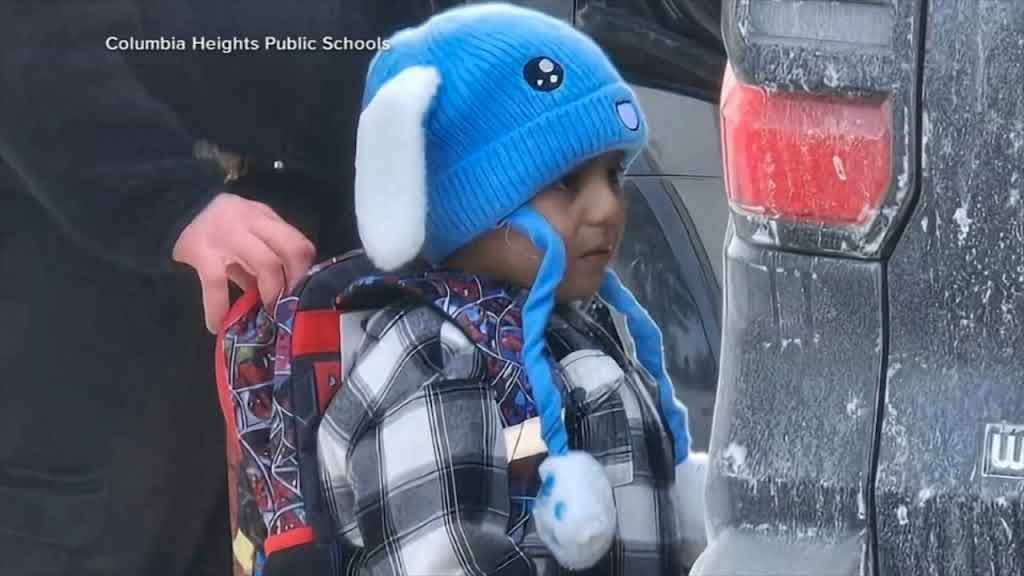
Tensions rose even further when ICE arrested five-year-old Liam Conejo Ramos and his father. Both Ramos and his father were detained by ICE and taken to Dilley, Texas where currently they are being held at a immigration detention center. According to the family's lawyer Marc Proksch, the pair came from Ecuador in search of American asylum telling The New York Times “These are not illegal immigrants. They came here legally and are pursuing a pathway.” The sight of the image initiated an outcry leading to more protests from the surrounding residents, heightening tensions further in the area.
Many are protesting ICE in their own way, be it social media, public assembly or other means. Despite this it seems as though ICE’s policies continue to be indifferent in response to public outcry, stemming from the concerns of citizens nationally stating that ICE isn't making Americans feel safer. As the Declaration of Independence states, the government's power comes from the people and “That [when government] becomes destructive, it is the right of the people to alter… [and] institute new government” it's up to the concerned citizens to change their government as they are the voice of the people.