An Opaque Path to the Board of Trustees
Sophie Sukendro
At the start of the 2025–2026 school year, OCSA announced the appointment of Natalie Odebunmi to its Board of Trustees, citing her extensive experience in public education, leadership in Capistrano Unified School District and ties to the school as an alumni parent.
What the announcement did not include was how the vacancy arose, how candidates were identified, or what steps occurred prior to the appointment. Beyond the final outcome, little information was shared publicly about the selection process itself.
Trustee selection occurs outside of official public meetings. Under OCSA’s charter, two trustees are appointed by the Orange County Department of Education, while three are appointed by the OCSA Foundation. The vacancy filled this year fell under the Foundation’s authority. Shaffer shared that a selection committee interviewed multiple candidates.
Odebunmi said she entered the process after being contacted directly by OCSA President and CEO Teren Shaffer. She met with Shaffer and Chief Operational Officer Greg Endelman to “learn about OCSA’s Board of Trustees, the current state of the school, etc.” and later participated in a formal interview “led by a selection committee of the OCSA Foundation Board of Directors.” Odebunmi was ultimately appointed following the selection committee’s recommendation that was approved by an OCSA Foundation Board vote.
What remains unclear, however, is how candidates were identified or invited into that pool in the first place. There was no formal announcement of the vacancy, no public call for nominations or applications, no published selection criteria and no timeline shared for how or when the position would be filled.
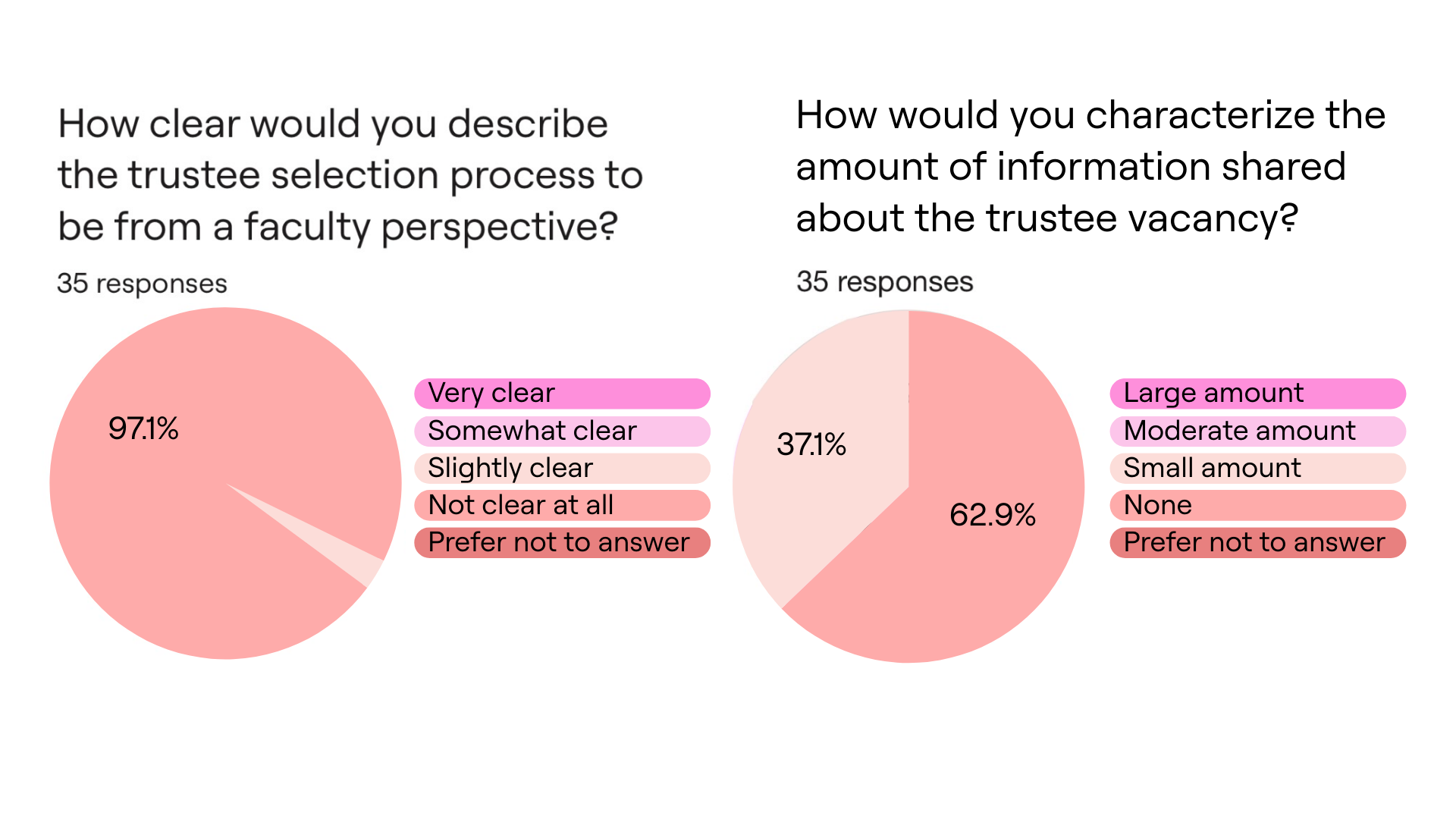
In an anonymous survey sent to all teachers, 97.1 percent of respondents answered “not clear at all” to the question “How clear would you describe the trustee selection process to be from a faculty perspective?” Some educators said they learned of the vacancy only through informal conversations or a mention on the board webpage that a seat would be filled at a later date, with no additional information provided.
Faculty concerns extend beyond this appointment. Multiple teachers expressed frustration with what they described as a longstanding lack of transparency in school governance. “The decisions of the board affect teachers and students directly and substantially,” one teacher said. “Yet teachers have no voice in determining who sits on the board.”
Several educators said repeated requests for the OCSA Teachers Association to appoint a representative to the Board of Trustees have been denied. Some also questioned why OCSA trustees are appointed rather than elected, noting that many other public schools rely on elected boards to provide broader community oversight. Others raised concerns about term limits, accountability, and the concentration of appointment power, and proposed broader stakeholder involvement in trustee selection through groups such as OCSATA, People Supporting OCSA, and the OCSA Foundation each appointing a trustee.
While some teachers acknowledged recent efforts to improve compliance and website transparency, many described the trustee selection process as fundamentally opaque. As one teacher summarized, “It’s encouraging to see someone with an education background join the board. But given years of calls for transparency, the process itself felt closed off.”
As OCSA continues to emphasize accountability and community engagement, the question raised by this appointment is not the qualifications of the trustee selected, but how visible, participatory and accountable the process of selection is to the community the Board is meant to serve.
The Situation in Venezuela
Audrey Smith and Asmi Aggarwal
In early January, the United States launched an extensive military operation against Venezuela, involving airstrikes and a rapid ground assault that resulted in the capture of President Nicolás Maduro. Titled Operation Absolute Resolve, the mission involved striking targets in and around Caracas by American forces before Maduro was arrested and transferred to U.S. custody in New York. There, he is facing criminal charges including narco-terrorism and drug trafficking allegations.
Following Maduro’s removal, Venezuela’s political leadership entered a significant period of uncertainty. Vice President Delcy Rodríguez was sworn in as interim president by Venezuela’s Supreme Court and has since sought to lead the country through its immediate constitutional and economic challenges. Rodríguez, who previously held roles overseeing Venezuela’s oil sector and economy, emphasized institutional continuity and the need for foreign investment to revive the country’s weakened oil industry.
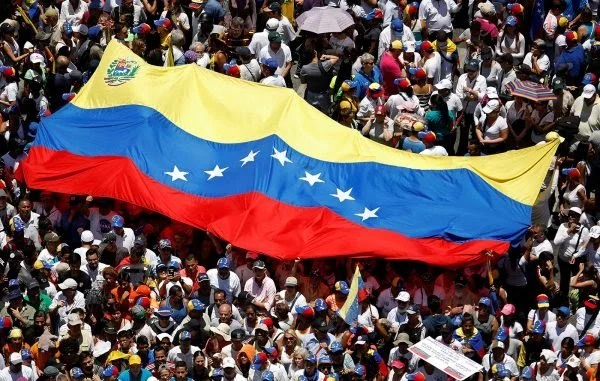
The Trump administration has also signaled intentions to rebuild Venezuela’s oil infrastructure in coordination with American companies, framing oil revenues as a tool for economic stabilization and a potential pathway towards easing sanctions. Officials have described this involvement as part of Venezuela’s recovery, though critics argue it reflects a deeper effort to place the country’s most valuable resources under U.S. influence. Venezuelan analysts opposed to the intervention contend that control over oil remains a central driver of Washington’s policy, raising broader concerns about sovereignty and long-term economic dependence.
This strategic emphasis on oil ties directly into the framework of the petrodollar, the currency system that supports global oil trade. Since these transactions depend on U.S. dollars, the system has significantly helped maintain their strength. However, some countries like China, Russia, Iran, North Korea and Venezuela have increasingly sought to trade outside the dollar system in order to avoid U.S. sanctions. Combined with inflation and other global pressures, this shift has contributed to depreciation of the dollar, with the U.S. Dollar Index down about 11 percent — its weakest level in four years.
In response to this shifting landscape, U.S. officials have described plans to control portions of Venezuelan oil production and exports, with crude oil sold at market rates as a way to limit adversaries’ influence and reshape the country’s energy sector. As part of this approach, Washington has pressed the interim government to scale back trade relations with China, Russia and other partners amid a broader geopolitical realignment.
President Trump has made it clear that inflation is at the forefront of his administration’s concerns — pursuing strategies such as tax cuts, heightened tariffs and expanded job opportunities to address it. Rising gas prices have especially remained a major frustration for American consumers, pushing the administration to emphasize energy policy. Within that broader context, Venezuela has become a particularly strategic target for the U.S. As a country that has moved away from the petrodollar system, it represents both an economic and geopolitical challenge.
The global reaction has been mixed, but predominantly critical. Key allies of Maduro, including China, Russia and Iran, openly condemned the U.S. operation as a threat to Venezuela’s sovereignty — with some calling it a dangerous precedent. Many Latin American governments echoed these concerns, arguing that the intervention undermined regional stability and multilateral norms. Several European countries urged restraint and respect for international law without fully endorsing the U.S. action. A smaller group of American allies, including Israel, Argentina and the United Kingdom, expressed conditional support for removing Maduro, framing it as a step toward political change. Overall, global reactions have leaned toward caution and legal concern, reflecting uncertainty about the implications of U.S. military involvement and the erosion of established norms.
A New Era of Student Life
Victoria Baek and Ellie Choi
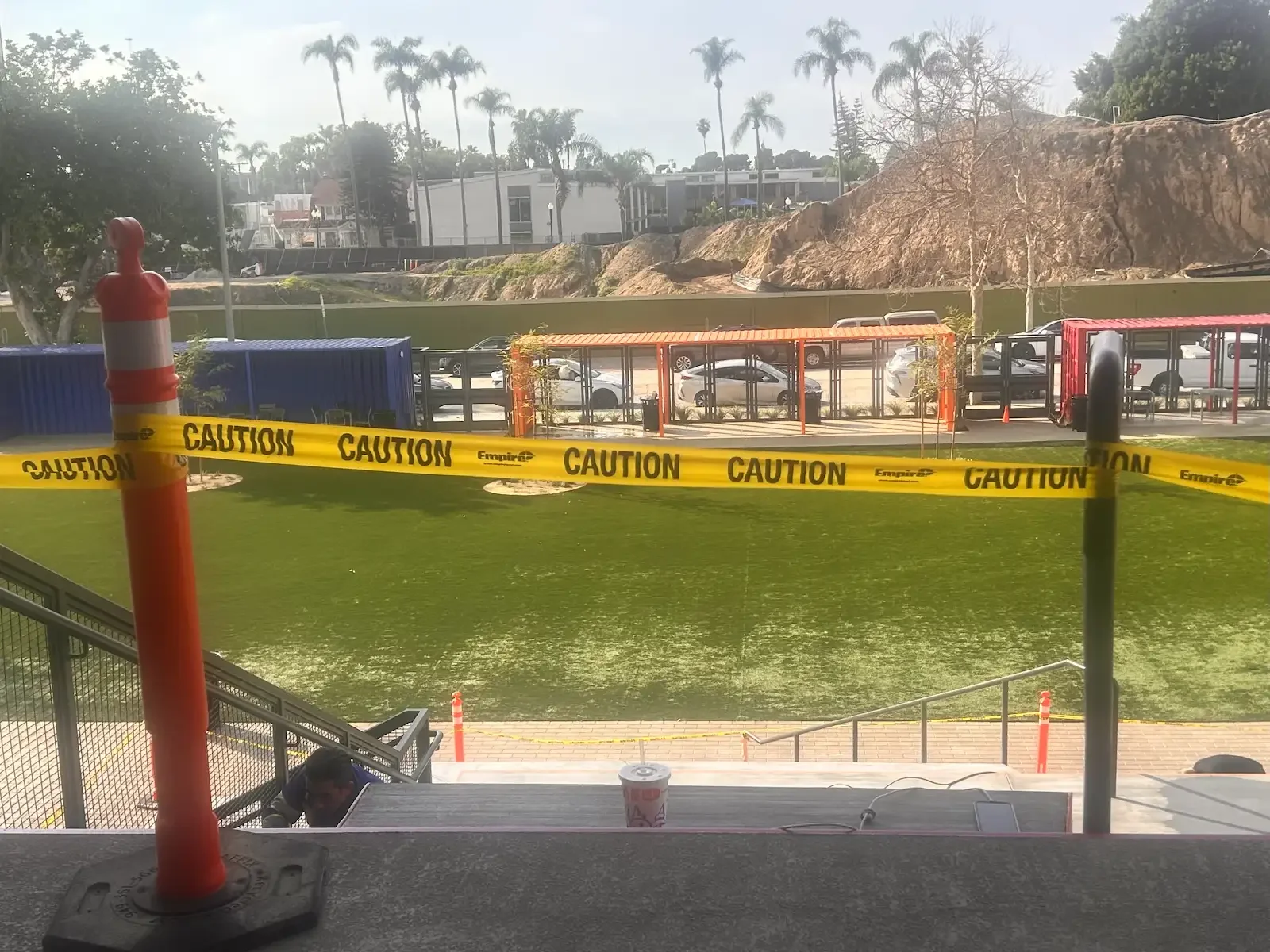
As winter break came to an end, OCSA students received an exciting email update from the Assistant Principal of Student Supervision, Abbe Levine, regarding the finished construction project of the new student common spaces. Described by Levine, the new Lisa Argyros Commons (formerly a parking lot) and Larry and Helen Hoag Foundation Student Lounge (formerly a storage area), lined with new fencing, are completed.
OCSA’s campus has been under construction for the past few years. During this time, students have endured construction noise, dust and traffic. Wooden boards covered walkways and passageways shrunk to accommodate buildings, making the commute to class difficult. But now, the construction is practically finished..
The first new student space is the Lisa Argyros Commons, which consists of expansive turf areas, new tables and chairs and walkways. The space is in front of the new Grand Staircase outside the Annex. Since school began, students have been enjoying lunch and break periods sitting on the turf.
Mckenzie Gil (CW ‘27) said that the Commons “reminds [her] of a college campus” with its “open structure and modern look.” She finds it “enjoyable to sit with friends on the grass,” rather than by the 10th Street tree or tables.
Also, the construction of the indoor Larry & Helen Hoag Foundation Student Lounge is completed and built in the breezeway. According to Levine’s email before second semester began, the “Student Lounge is available for use as a safe, interior space for students to hang out whenever OCSA’s campus is open for use” and “students can eat in the Student Lounge, as long as everyone cleans up after themselves.”
In a past Evolution article, staff Bella Chiodo (VA ‘25) and Samuel Parigela (CW ‘25) wrote how the new spaces “enclose the Tower, Annex and Media Arts Center with a perimeter fence similar to the DMS plaza” in order to “create a safer space for students to hang out before and after school, as well as provide more visitor control here on campus.”
The other projects of the capital campaign, which have been completed earlier, were the Serenity Center, the movement of the Scott & Charlotte Egan Studio Theatre (formerly a small black box theatre space) and the movement of the Production Shop (formerly located in the current Studio Theatre space). Additionally, if you pass by 10th Street, you may notice the caution tape and black and white piano keys, as Venezuelan-American painter Eric Michael undertakes this 214 foot by 32 foot mural called the 88Keys Project.
The vision for the new spaces was to “create a unified campus experience where students can build community” because OCSA is located in an urban environment, so “it often doesn’t ‘feel’ like a campus,” said Levine. Going forward, OCSA community events like Club Rush, Taste of OCSA, Spirit Week festivities and more will take place in the Commons.
Some OCSA students have conflicting thoughts about the new spaces. While Gil noticed that “the vibes are more exciting than when it was cramped on 10th Street during mega lunch,” others disagree. Aryan Sharma (CW ‘27) said, “I don’t like how we are in the middle of a walkway and how it became the new 10th Street.” Others have also noticed the increased foot traffic outside the staircases due to activities taking place on the Commons.
Nevertheless, the OCSA student life now has new amenities to support the realities of a shared urban campus, marking the close of years of construction and the beginning of a new era for student experience.
Trump's First Year in Office
Angie Kidder
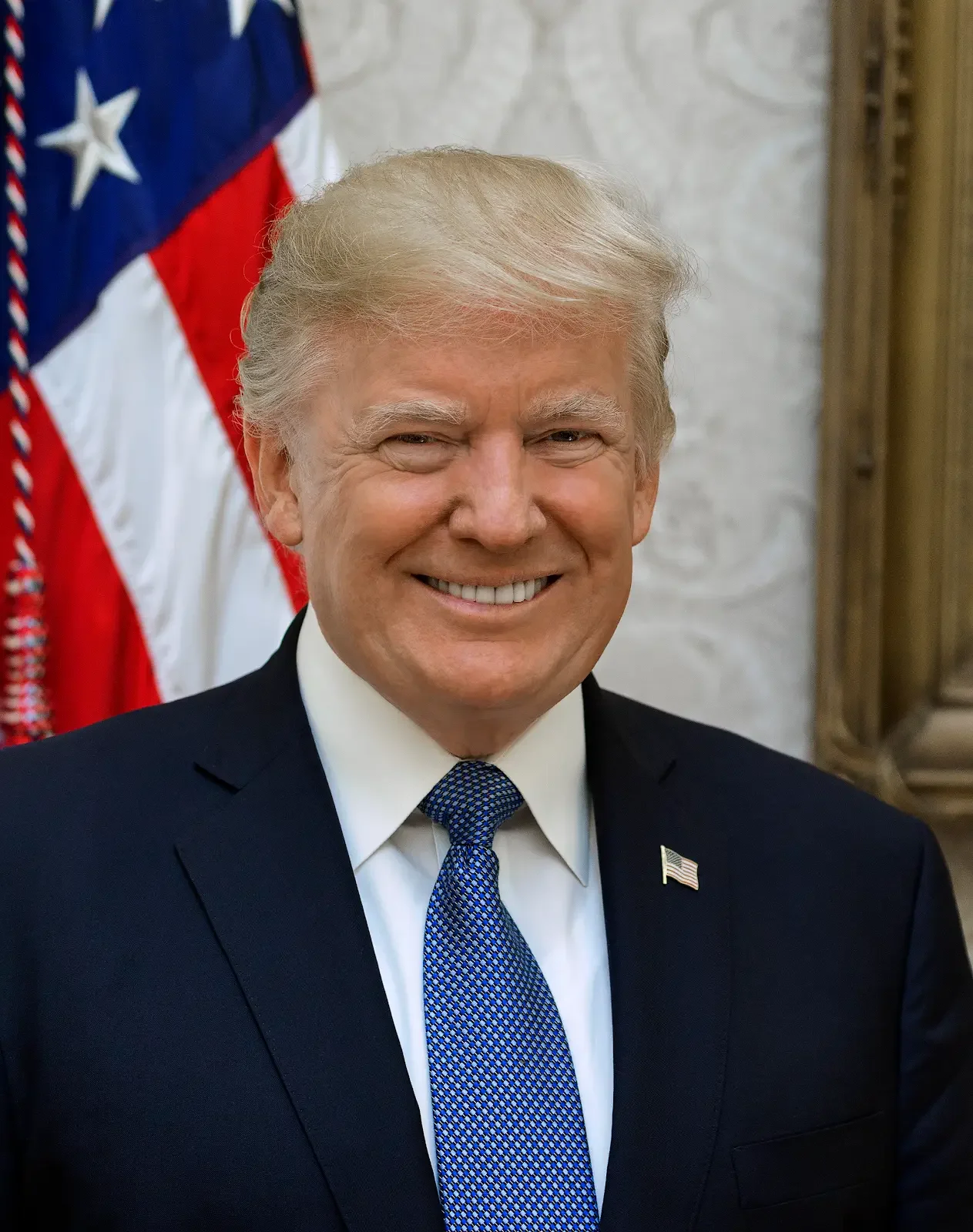
On Inauguration Day last January, Trump declared that the “Golden Age of America” had arrived. January 22 marked the first year of President Trump’s second term in office. Although it is debatable whether or not we have entered a golden age in American history, there is no doubt that the nation has been sent into a new era—one of a major shift in both domestic and foreign policy and disputes that have divided the country.
President Trump has described his new foreign policy as the “Donroe Doctrine,” alluding to the Monroe Doctrine which reimagined the United States as a global power in the Western Hemisphere. One of the efforts to express this new foreign policy model was the on-ground military operation to capture former President Nicholas Maduro of Venezuela and bring him to the U.S. to face trials for supporting cartels. The mission followed a lethal strike on a boat allegedly carrying narcotics, which drew sharp criticism from Democrats as it was done without legal authorization from Congress.
Perhaps the most contentious foreign policy issue has been Trump’s repeated insistence that the United States should own Greenland, a semi-autonomous Danish territory. That push has escalated tensions with European allies, who have mobilized diplomatically in response. Despite vowing to end the war in Ukraine his first day in office, a treaty is yet to materialize. Trump has met with Ukrainian President Volodymyr Zelenskyy multiple times and held a summit with Russian President Vladimir Putin, but no significant changes have been made.
One of President Trump’s biggest changes to the federal government was the creation of the Department of Government Efficiency (DOGE). Led by Elon Musk and Vivek Ramaswamy, DOGE was intended to cut $2 trillion in federal spending, and only met about $160 million. With a tumultuous exit by Elon Musk last year and a quiet exit from its other leader, Vivek Ramaswamay, there is no clear answer on who is in charge of the department or if it is currently working. DOGE has currently been scheduled to end on July 4.
Furthermore, President Trump campaigned on a promise to carry out the largest deportation operation in history. In mid-December, the Department of Homeland Security stated there had been an estimated 622,000 deportations up to that point. Immigrations and Customs Enforcement held 73,000 in custody — the most ever recorded. Additionally, brutality from ICE agents have been witnessed all over the country. On January 7, Renée Good was fatally shot in Minneapolis after encountering an ICE agent who claimed she had run him over, although body cam and other footage from witnesses has shown no clear indication of this occurring. A wartime authority had also been invoked to send hundreds of mostly Venezuelan migrants to El Salvador's notorious prison. According to a Human Rights Watch report, half had no criminal history and just eight had been convicted of violent or potentially violent crimes.
One year into Trump’s second term, the United States has entered a period of uncertainty and upheaval. Bold executive actions, contested foreign policy moves and aggressive domestic enforcement have redefined the presidency — leaving the nation divided over whether these changes signal renewed strength or lasting instability.
The Mamdani Effect
Lucy Hunter
The name is Mamdani, and in just 30 days, he has significantly changed New York City’s political landscape. Zohran Mamdani, who was elected the mayor of New York City last November, was sworn into office on January 1. Since then, his administration has issued 12 executive orders, including two emergency executive orders — a number that Eric Adams’ previous administration took months to achieve. It’s safe to say that Mamdani jumped in head first, and has certainly wasted no time in making striking changes to the city. Let’s take a look at what he has accomplished in a few short weeks.
Within his first week in office, Mamdani issued Executive Order 3, which revived the Mayor’s Office to Protect Tenants Agency. This agency was created in 2019, but sidelined by Adams, the previous mayor. This executive order coordinated tenant protection efforts across the city, while cracking down on repeat-offending landlords and advocating for renter’s interest above all else. In conjunction, Mamdani also issued two other executive orders to target the housing market. The Land Inventory Fast Track (LIFT) task force will identify buildings and construction sites capable of supporting at least 25,000 new units within the next decade, with the goal of making housing more available and affordable.
Mamdani made another historical change through Executive Order 9, which established a task force to fight hidden charges that inflate prices at checkout. Executive Order 10 follows in the previous order’s footsteps by combatting subscription traps.
Mamdani has also spent his first few weeks aiming to make New York City not only safer, but healthier. He has already begun to improve the city’s homeless shelter system and reform the process of appointing judges to local courts. Mamdani also plans to address health issues at local jails.
The biggest news is undoubtedly Mamdani’s move to issue universal childcare across the city. Mamdani critics were aware of this plan prior to his re-election, but many believed it wouldn’t happen, or the effort would fall short. However, just one week into his term, Mamdani partnered with the state governor, Kathy Hochul, to make pre-K available to all children statewide, expand child care subsidies to thousands of additional families, and increase statewide childcare investment spending to a staggering $1.7 billion.
On top of these larger changes, Mamdani has also focused on making less noticeable alterations to the city, such as opening up shelters for those seeking warmth from the city snowstorm and cleaning the Subway cars for the first time in over a century.
With this much accomplished in four weeks, NYC residents and US citizens alike are both excited and anxious to see where the rest of Mamdani’s term goes. Will he continue to accomplish the unthinkable, or will it level off in a few months? Only time will tell.
A Recap on ICE
Zaid Salazar
As we complete the first full year under the second Trump administration, Immigration and Customs Enforcement (ICE) has continued to be a significant topic of debate, with prolonged concerns about the rationality of its advancements.

Upon his inauguration, one of Trump's main focuses was border security, focusing primarily on members of the cartel, gangs and drug traffickers, having signed multiple executive orders to regulate immigration. Along with this, Head of the Department of Homeland Security Kristi Noem directed ICE to reinstate mass raids and detain suspected illegal immigrants. This was supported by the Supreme Court ruling for Vasquez Perdomo v. Noem in September legalized ICE to “[make] brief investigative stops to check the immigration status of those who gather in locations where people are hired for day jobs that often do not require paperwork [since they are] attractive to illegal immigrants,” which according to the American Immigration Council gave them the green light to racially profile.
ICE’s harsher enforcement policies have led to detrimental consequences for American citizens, with the shooting of Renee Nicole Good as a clear example. During the incident, Good attempted to back away from the enforcement officers as they surrounded her car. As she attempted to move the vehicle, an ICE officer fired three close range shots — hitting her in the head. The residents watching nearby attempted to provide aid, but were denied by the ICE officers. Good's shooting and ICE’s reaction sparked intense public outrage and criticism of the government. Both Trump and Noem defended the agent, with Trump posting that he was “viciously run over” on Truth Social. Noem claimed “[he] fired defensive shots” because Good was “[attempting] to kill them [in] an act of domestic terrorism.” This caused nationwide protests against ICE, with citizens questioning the intentions of ICE under these policies. Good along Alex Pretti and Keith Porter Jr. are some of the many who have been at the hands of ICE, leading to their deaths.
In response to these protests, ICE has used non-lethal forces including rubber bullets, pepper spray, tear gas and general brute force. Ramifications have included permanent injuries and multiple protesters have been left blinded after being shot with rubber bullets.
Tensions rose even further when ICE arrested five-year-old Liam Conejo Ramos and his father. Both Ramos and his father were detained by ICE and taken to Dilley, Texas where currently they are being held at a immigration detention center. According to the family's lawyer Marc Proksch, the pair came from Ecuador in search of American asylum telling The New York Times “These are not illegal immigrants. They came here legally and are pursuing a pathway.” The sight of the image initiated an outcry leading to more protests from the surrounding residents, heightening tensions further in the area.
Many are protesting ICE in their own way, be it social media, public assembly or other means. Despite this it seems as though ICE’s policies continue to be indifferent in response to public outcry, stemming from the concerns of citizens nationally stating that ICE isn't making Americans feel safer. As the Declaration of Independence states, the government's power comes from the people and “That [when government] becomes destructive, it is the right of the people to alter… [and] institute new government” it's up to the concerned citizens to change their government as they are the voice of the people.
Ban on Balls
Luka Stantic
For thousands of years, children have been playing with balls to pass the time, make friends and blow off some steam. And now that simple joy has been threatened by the boundless authority that OCSA administration exercises.

Picture this with me for a moment: it’s the first day back to school after winter break and you and your friends have been really excited to reconvene and play some catch on the brand new OCSA commons. After waiting all day for lunch, the moment the ball leaves your hand you have five furious OCSA administrators threatening to take it from you because of a new rule they made up while you were gone. Furthermore, they say any ball that isn’t foam is banned from now on. Banning balls is wrong, but the way OCSA enforces their rules is even more so. It is a question of unchecked authority and the absence of one’s voice in decisions that affect them.
Sports are something that every person should include in their lives. They improve physical health, mental health, and overall wellbeing. It is something high schools should be encouraging, not restricting. Coming to OCSA, we already knew sports weren’t going to be the school's strong suit, but when a brand new field is given to us, it is shocking to be faced with a schoolwide ban on proper balls, effectively banning sports anywhere except for a small area at the outskirts of campus barely big enough to fit three benches and a basketball hoop. Not nearly enough to encourage people to move their bodies. OCSA thinks they can just throw the sports community into a corner of the school and forget about them. But they will not go quietly…
I have heard from the people who believe there should be more dialogue between OCSA admin and the OCSA community. This rule was enforced with no advance notice. No student was involved in the making of the decision, but we are the ones that suffer because of it. OCSA has, however, allowed soft nerf balls and hacky sacks to be used on the new quad. Although with good intentions, I believe this is the complete wrong way to face this issue. They believe sports are a dangerous thing to have on campus instead of something that brings life to the community. Instead of allocating specific spaces on the field for sports, or even asking the students for their opinion, they just decided they couldn’t be bothered. They’d rather just say no to balls and call it a day. This is when authority becomes dangerous. If voices continue to go unheard, then what's to stop systems in power from making and enforcing more rules that benefit nobody but them.
With sports comes “liability” and “danger,” but that’s life. In this educational environment, they should be teaching us to face life with the best attitude we can, not confiscating sporting equipment in the fear of a stray ball. OCSA has never had the proper facilities to have an expansive sports community, yet many students take it upon themselves to make an environment where people can exercise and enjoy themselves. The students have done more for this cause than any administrator. Last year, the volleyball community worked on putting up and taking down volleyball nets every day at lunch just so people could play, and now they can’t even bring a volleyball to school. I’ve had fond memories of playing ball with my friends on and off campus, and now the fields remain empty of play, because someone, somewhere, made a decision.
Do We Care about the Grammys?
Dax Philips

The Grammys has been a staple of American pop culture for generations, setting a standard for the success of our favorite artists and rewarding the artistry behind the works of art that transcend the average listening experience. However, what role should an award show have in contemporary society, and what agency should fans and artists alike have over ‘music’s biggest night of the year?’
The most overwhelming topic of conversation from the 67th Annual Grammy Awards was how popularity and streams should be taken into account for nominations and wins. So, it might be surprising to hear that the Academy’s original purpose for the awards was to recognize artists, composers and producers not ‘important’ enough for a star on the Hollywood Walk of Fame. However, during the gradual integration into award season, the purpose of the awards seemed to get lost in the publicity and the atmosphere around the event; social media discussions revolved around debating which ‘star’ deserved to take home the award. However, the Recording Academy’s 13,000 professional musicians who vote based on their own respective genres and abilities together in the ‘big four’ awards do not view the nominations in the same light as the average listener.
Dr. Krupesh Thacker, a proud Academy member, affirmed on Facebook after finishing the voting process, “I have focused on artistic and technical excellence, on intention over popularity, and on respect for the immense effort behind every recording.” This objectivity isn’t a constant in the community though; CEO Harvey Mason Jr. heavily criticized a fellow voter on their outspoken perennial bias against nominee Lana Del Rey for a contentious SNL performance 13 years earlier.
It is valid to criticize the Academy’s integrity, but it is just as valid to criticize the parasocial loyalty of ‘superfans’ hellbent on their idol taking home a Grammy. And Wzwwhile the awards do tend to reflect the views of the audience, they have struggled in the past to highlight not only more diverse genres of music, but also artists who represent anything other than a majority.
The Weeknd famously boycotted the 63th Annual Grammy Awards after not receiving any nominations for his most successful album, “After Hours,” or the most streamed song on Spotify to date “Blinding Lights.” He cited “corruption” from “secret committees”, who had the power to veto nominations from any artists, most notably from the Black community. The Weeknd presumed, “The only real [explanation] is that in the last 61 years of the Grammys, only 10 Black artists have won album of the year.” However, he critically ended the boycott with a surprise performance during the 2025 Grammys, and reasoned that the organization had made sufficient progress towards aiding racial minorities through staff diversification efforts and launching initiatives like the Black Music Collective rewarding scholarships to the next generations of promising Black artists.
Efforts to criticize the Recording Academy have incentivized long awaited changes for not only the awards but also to the music industry as a whole. But it is up to you to choose what to take away from the event whether it be a role model, a memorable night or even a much-needed constructive criticism.