Jumpscare! The Horrors of Stair Traffic
Lucy Hunter
In all honesty, I have an elevator pass. However, for this experiment, I trekked my way up and down the tower’s steps to determine one crucial thing: How bad is stair traffic?
I was warned of its horrors long before coming to OCSA. For three years, I witnessed every mishap imaginable: the various liquids spilled upon the stairwell landings, traffic jams caused by rolling backpacks, and screenagers who triggered a domino effect upon the descent for lunch. Finally, at the start of my senior year, I was granted my prized possession: The OCSA Elevator Pass, and it happened just in time. Due to an increase in construction over the summer, OCSA students began the 2025-2026 school year with a revelation: Stair traffic is bad. Really, really bad.
So I sought to get to the bottom of this issue. Were people being hyperbolic? Are people simply too lazy? Or is stair traffic really the reason why dozens of kids shuffle into classrooms after the bell rings?
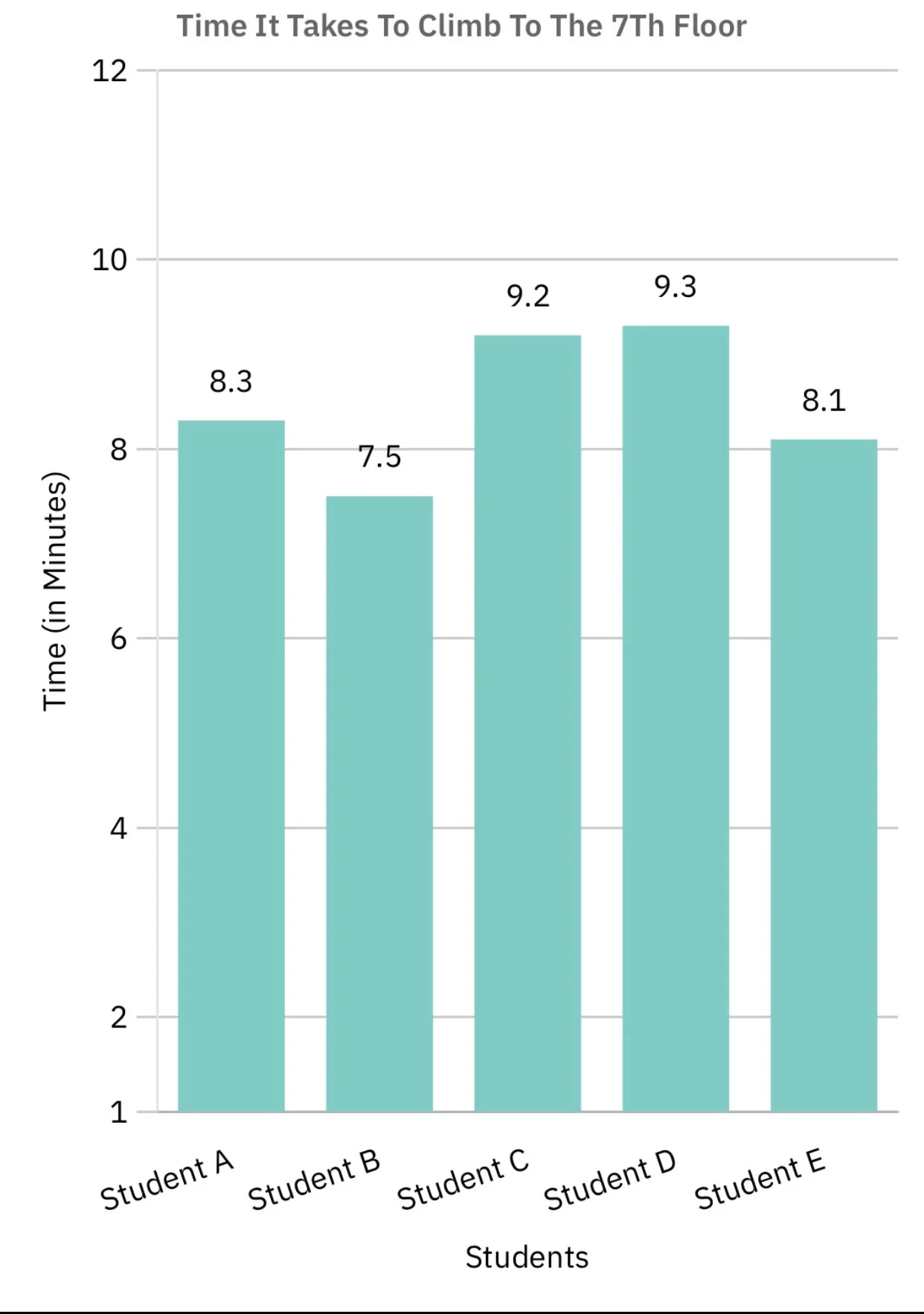
For this experiment, I conducted it over the course of two days: One Blue day, one Gold day. I timed how long it took me to reach the fourth and seventh floors from the breezeway, starting at 8:20 a.m., intending to make it to class before 8:30 a.m.. Here are my findings:
On the Blue day, it took me five minutes and thirty-eight seconds to reach the fourth floor from the breezeway, and nine minutes and fifty-three seconds to reach the seventh floor from the breezeway. The stair traffic that morning was decently heavy, but not the worst I have seen. Even then, if I had a class on the seventh floor, I would have barely made it. It’s important to note that I followed all stairwell rules. I did not cut anyone off, run, and I used the proper stairwell as recognized by the markings on the floor.
On the Gold day, it took me five minutes and thirty seconds to reach the fourth floor, and ten minutes and one second to reach the seventh floor. The stair traffic that morning was hectic, with several people violating stairwell rules.
So what does this tell us? Stairwell traffic is jammed, and the allotted time given to students to reach class in the mornings is just barely enough. However, this does not include potential domino effects, shoving, food or liquid accidents that block proper travel, or students who descend the stairwell when others are ascending, making it more difficult to travel upward.
So, were people being hyperbolic? Not really. For the students who begin their ascent right at 8:20 a.m., they still risk tardiness if their class is on a higher floor. However, most stairwells have consistent lines outside the tower that students must wait in before they can even enter the building, raising the risk of tardiness.
To all the students who arrive at school on time but have racked up tardies due to stair traffic, I understand you, and I see you.