Rise in National Censorship
Kimura Carlsten & Charlie Patmon
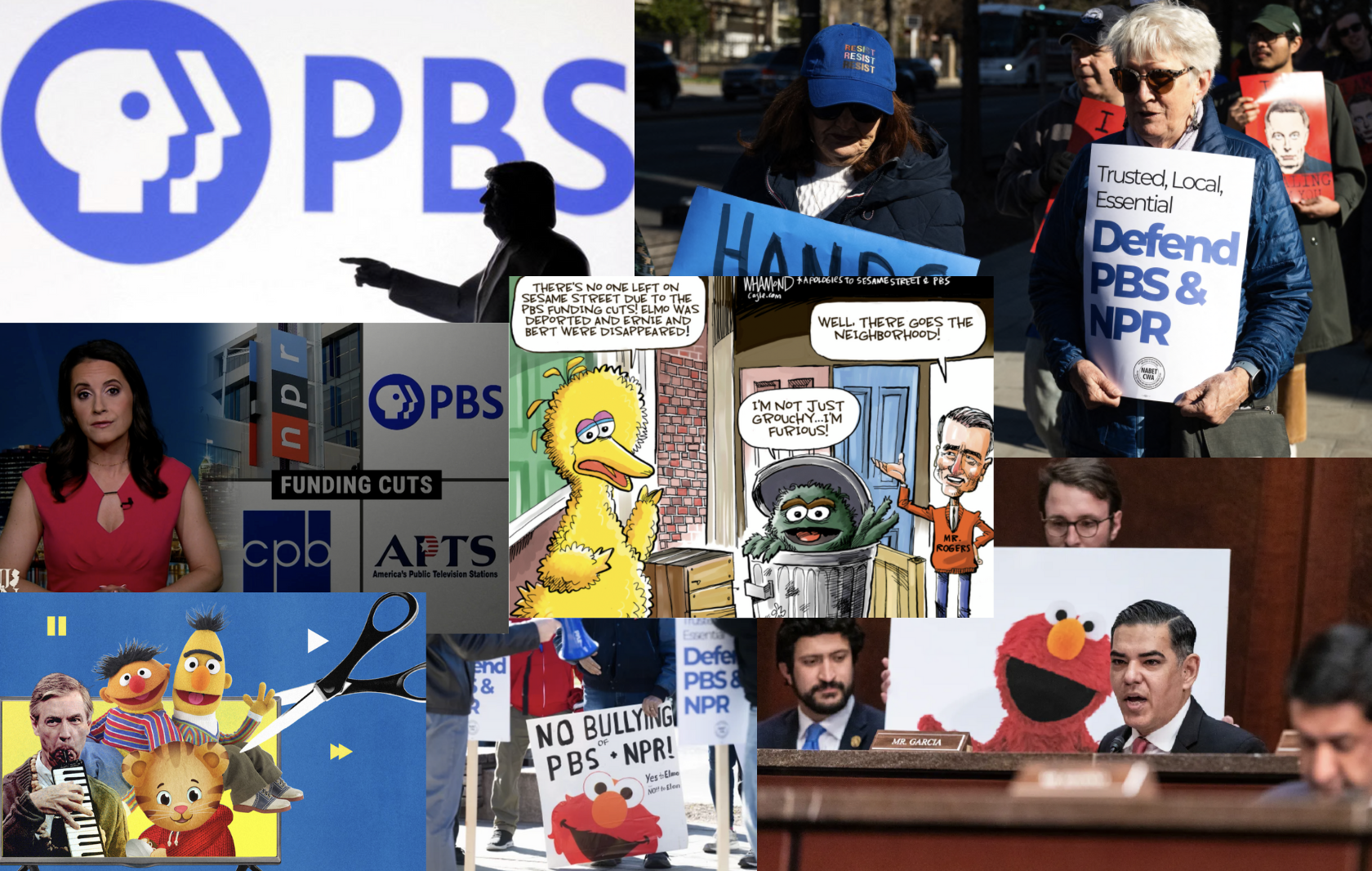
Censorship has existed since the beginning of time. It’s been a tool that has helped regulate public records and news as well as protect the masses from misinformation. But it also carries a more sinister history. The phrase “damnatio memoriae” comes from Latin, meaning “condemning memory,” and dates as far back as Ancient Egypt — where any attempt to memorialize “unworthy” pharaohs was purposefully erased.
More recently, we’ve seen it used in photographs and texts by the Soviet Union, Nazi Germany and communist China. Now, during the Trump administration, Congress has made significant cuts to federal funding for public broadcasting. Is this an attempt to consolidate news sources or a modern approach to “damnatio memoriae”?
The Jimmy Kimmel show was pulled from air by ABC on Sept. 17 after Kimmel made controversial comments about Charlie Kirk’s alleged shooter. In the days following Kirk’s death, Kimmel commented that the Republican party was “desperately trying to characterize this kid who murdered Charlie Kirk as anything other than one of them, and doing everything they can to score political points from it.” Involved in the decision to cut the show were Robert A. Iger, Disney’s chief executive, and Dana Walden, ABC’s television chief. The decision was made due to criticism from Republican politicians like Brendan Carr, Chairman of the Federal
Communications Commission. Carr criticized Kimmel’s comments and later praised Comcast, ABC’s parent company, for pre-empting the show and “doing the right thing.” After pushback from the film industry, Democrats and even some Republicans, ABC announced the return of the show on Sept 22.
These cuts extend beyond television programming. President Trump’s proposed $9 billion reduction to foreign aid and public broadcasting — including about $1.1 billion affecting outlets like PBS — has forced many organizations to scale back their budgets, programming and staff.Recently, PBS’ Chief Executive Paula Kerger announced a 15 percent cut of its jobs. Many have protested these cuts as PBS has served as a reliable source of news and entertainment for the masses. In a memo, Kerger wrote: “Over the last weeks, we have been working through how best to manage the impact of loss of federal funding… Just like every single public media organization in the country, we are being forced to make hard choices.”
Recent conflicts between the Trump administration and large news outlets have heightened fears about press abridgment. Early this year, the White House restricted the Associated Press’ (AP) access to Oval Office briefings, to which AP accused the U.S. government of retaliating by limiting access. This began after President Trump issued an executive order to rename the Gulf of Mexico to the Gulf of America. When AP issued a statement, it said it would continue using the name Gulf of Mexico to hold to its global editorial standards. The White House then barred AP from attending presidential press conferences, causing AP to sue the administration on the basis that it was a violation of the First Amendment. While a federal court ruled in favor of AP, an appeals court granted the White House permission to continue limiting access to the Oval Office.
On a larger scale, these situations have caused people to wonder about the extent to which the Trump administration will go to censor and defund the media. This has raised concerns about whether journalists will still be able to report freely without fear of government retaliation, or be lost to history under “damnatio memoriae”.