New Voters, New Rules
Ellie Choi
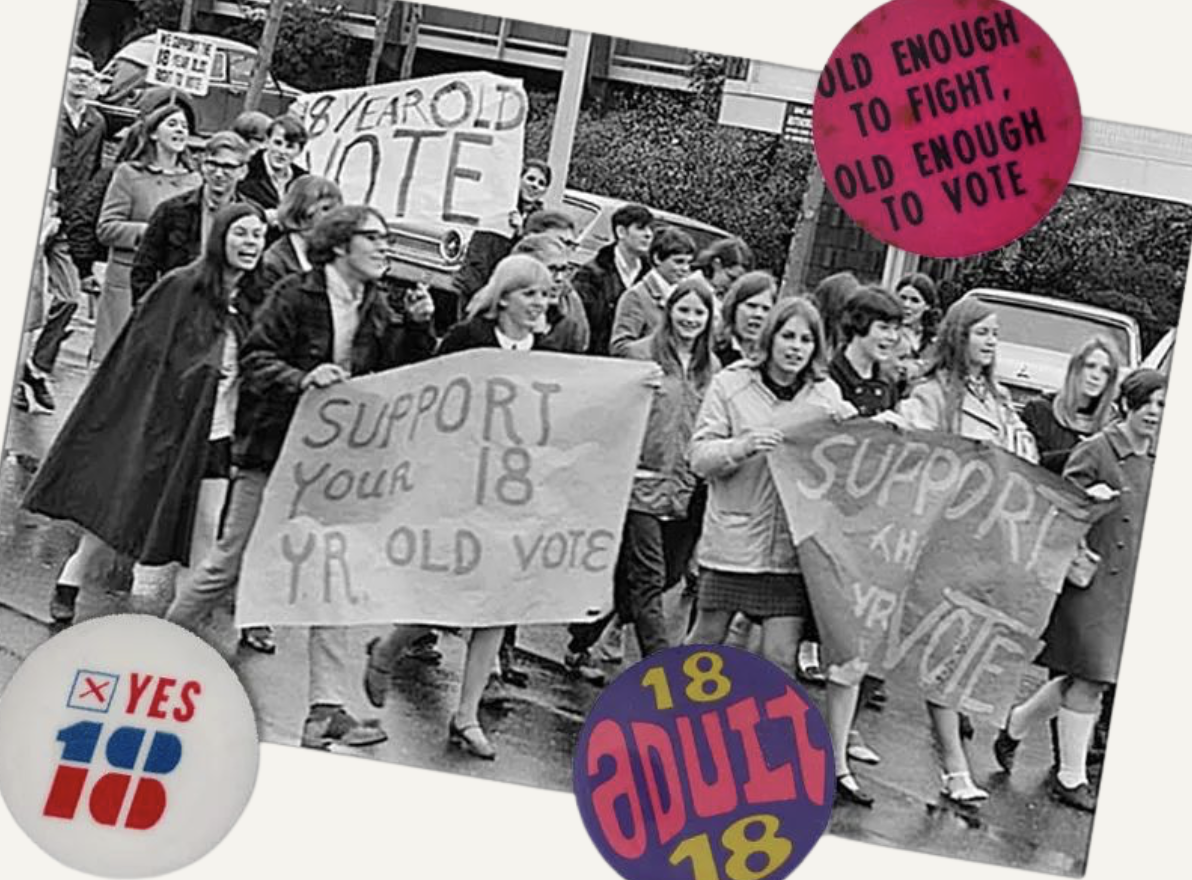
Photo Credits to Vicki L. Thorn/National Museum of American History
For thousands of California seniors, Nov. 3 will mark their first time casting a ballot in a general election.
According to data provided by Aimara Freeman, public information officer for the Orange County Registrar of Voters, 18,237 registered voters in Orange County are currently 18, and another 1,433 will turn 18 by Election Day.
AP Government teacher Carolina Osorio estimated that 20 to 25 percent of the seniors in her classes are registered. She said her students are generally “very tuned into politics, engaged and come in with a lot of prior knowledge.”
Some OCSA seniors are registered and eager to vote for the first time. “I’m excited to vote because I’m now old enough to contribute to issues affecting my community,” stated Addy Ngo (CW ‘27).
In addition to candidate races, California voters will decide on 14 state ballot measures this year. First-time voters will not only select candidates but also vote on Proposition 39, which would change how voters verify their identity when casting ballots.
Orange County citizens voting for the first time must register before casting a ballot. They can register either online or in person at the Registrar of Voters office. When registering, individuals must provide information including a driver’s license or state identification number, the last four digits of a Social Security number and date of birth. Under current California law, voters generally do not have to present identification at the polls. Instead, they verify their identity with a signature.
If Proposition 39 passes, additional identification requirements would apply when casting a ballot rather than only during registration. Those who vote in person would be required to present government-issued identification. Mail-in voters would have to provide the last four digits of their selected government-issued identification number on their ballot envelopes.
In the official voter guide’s arguments, supporters say the measure would increase public trust and confidence in elections. Opponents argue that voter impersonation is uncommon and that the additional requirement could prevent some eligible ballots from being counted; this could disproportionately impact individuals with disabilities, minority groups and people with low income.
Young voters already face challenges in successfully casting their first ballots. Freeman said first-time voters have the highest ballot rejection rate of any age group. “Common mistakes include submitting ballots too late or having signature issues.”
Osorio believes that a change in voter ID rules could cause confusion or unease. She expressed that encouraging young people to participate is important when trust in government is strained.
“Our institutions are being tested,” Osorio stated. “It would be nice to encourage greater engagement.”
“It’s interesting to be taking AP Gov during an election year because I’m learning about the process while participating for the first time,” Ngo said.
Art... Attacked?
Kimura Carlsten
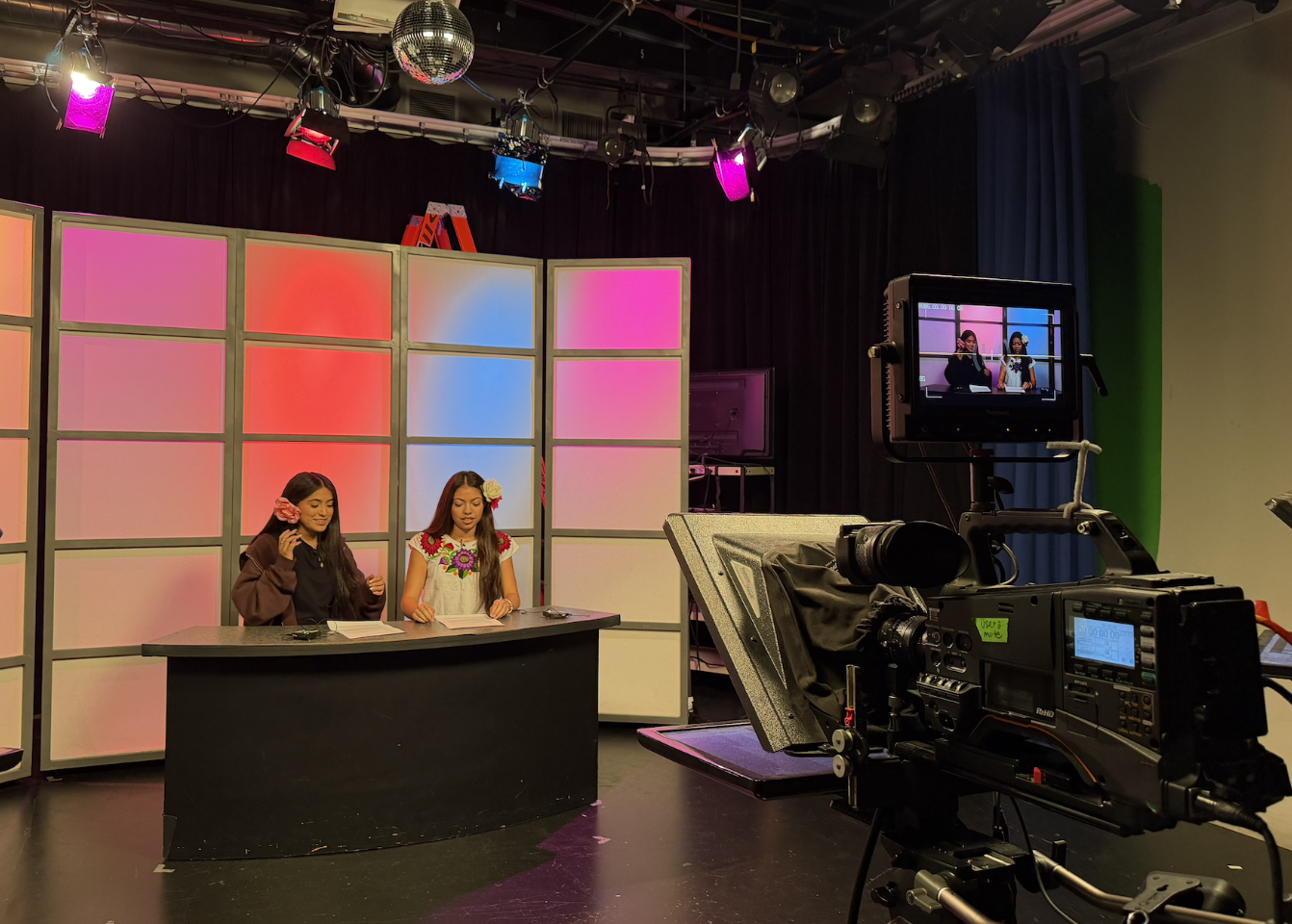
Photo Credits to Lani Masaki
Graduation cords are worn by seniors to recognize the organizations, clubs and honors societies they belong to. Most of those cords can be achieved by the entire graduating class, but there are four seniors every year who wear XLR audio cables. Most people look past the cables or don’t even know they exist. But, if you’re a part of the crew for Art Attack, you understand their true value.
These cords are ugly, but seniors flaunt them with pride because of the tradition. On the last day of every school year, four juniors who have spent their high school journey in Art Attack decorate cables for the graduating seniors. Cords are crocheted with flowers and adorned with heartfelt photos of unforgettable memories. I’ve seen this tradition make its mark for the last two years, and this year, I’ll be making a cord myself. However, I know that when I graduate in two more years, I won’t get one.
The four FTV students of the class of 2028 will be the last to inherit that position from conservatory because Art Attack is opening up to a lot more students who wish to participate.
Rabecca Woodruff, the Art Attack adviser stated “We’re trying to give opportunities to the masses to take an FTV class because not a lot of [the] electives are [related to] FTV.”
The elective class is set to open to anyone willing to give up a block of their schedule no matter their skill level or past experience. “If they want to do Art Attack, they’re going to take the broadcast and social media class. The goal is that we will have two classes — or two different levels — so we have Art Attack Live every single day during blocks three and six,” Woodruff explained.
The changes coming aren’t the first that have been implemented, however. If you were a student the past few years, you would have seen the incredible changes made to the format of Art Attack. It has gone from live every day, to live every blue day, to live and pre-recorded every other day. It doesn’t make sense at first, but these iterations were the result of teacher and administrative concerns.
While it might seem like an insignificant number of minutes students miss each day, it adds up. Having a class dedicated to Art Attack hopes to address these problems and bring more resources into the TV studio. Woodruff said “They are taking over. That way, it’s double-funded by both FTV and the school, so we can get better cameras, better backgrounds and so on.”
Still, it pains me deeply that future years of FTV students won’t experience Art Attack as I have. It was a tradition passed down from grade to grade, and the crew became my family. I grieve the fact that next year we won’t be able to share what we have learned with the years of FTV students beyond us. However, I’m happy for the broadcast class. They’ll be introduced to a world I love.
From Campaign Promises to City Hall: Mamdani’s First Year in Office
Charlize Patmon

Photo Courtesy of Stephani Spindel/VIEWpress
From Kampala, Uganda to New York City. A progressive and representative of the people. Former state assemblyman and rapper under the moniker “Young Cardamom,” and now, the first Muslim mayor of NYC and youngest in the last century. Zohran Mamdani.
His unique background as a student organizer and housing counselor in Queens has shaped his progressive platform based on affordability for NYC residents and creating an accountable and transparent city government.
Mamdani garnered significant traction early in the 2025 NYC mayoral race with his major campaign promises — including free buses, rent control, universal childcare and small business retribution. The high-interest NYC Mayoral debates in Oct. 2025 allowed him to captivate audiences in NYC and across the country, leading to his landslide victory over opponents Andrew Cuomo and Curtis Sliwa. Mamdani’s election not only earned him a political title, but more importantly, established him as the first Muslim mayor of NYC.
As the end of his first year in office nears, Mamdani has made great legislative strides — particularly in affordability and addressing New York City’s fiscal situation. Mamdani entered his term with the legal responsibility to address and work to curb NYC’s previous budget gap of $12 billion. He has done so almost immediately with his proposed Executive Budget of $124.7 billion, with its main purpose being to balance the budget without burdening working tax-payers. In this, Mamdani has recovered a total of over $4 billion by eliminating systemic inefficiencies. In addition, generous state contributions have been made under Governor Kathy Hochul and $500 million has been generated from Mamdani’s pied-à-terre tax on owners of second properties valued over $5 million. These actions leave many optimistic about the recovery of NYC’s financial state under Mamdani.
Along with his major fiscal advancements, Mamdani has delivered on many campaign promises, notably securing funding to support universal childcare and freezing rent for roughly 1 million rent-stabilized apartments in NYC. Recently, Mamdani has faced significant backlash for keeping NYPD commissioner Jessica Tisch in office. His democratic-socialist policy goals, at times, clash with Tisch’s conservative views on policing and crime. Nevertheless, Mamdani has managed to lower crime rates considerably since the beginning of his term, supporting what has been the safest start to any year on record for the city.
But one aspect of Mamdani’s administration has made it particularly memorable: the people. Although his approval ratings remain relatively similar to recent predecessors in their administrations’ first years according to a Quinnipiac University poll, a survey from Suffolk University reveals over two thirds of registered voters in NYC agree that Mamdani has performed better than expected. Another two-thirds has agreed that his administration represents average New Yorkers’ core values.
Social media reflects the Mayor’s strong connection to the people — especially the youth — as residents share stories of how their local issues are being resolved, sometimes after many years of asking for attention.
As midterm elections approach, there’s been a noticeable increase in democratic-socialist candidates making it to their respective primaries, with their campaign promises and ideals similar to those of Mamdani’s campaign. Many are focused on public good as it is applicable within their own jurisdiction: Michigan Senate Candidate Abdul El-Sayed has advanced on a campaign of affordability and eliminating political corruption, and Florida Senate Candidate Angie Nixon has, like El-Sayed, secured the Democratic nomination for Senate on her campaign of fighting for working Floridians. As more Democratic-Socialist candidates make advancements in primaries, it’s interesting to consider Mamdani’s impact as New York City’s first Democratic-Socialist Mayor.
At a Loss of Words? How the Digital Age has Impacted Literacy Rates In The New Generation
Sarah Wegner & YuQiao Shao
Collage Courtesy of Asmi Aggarwal
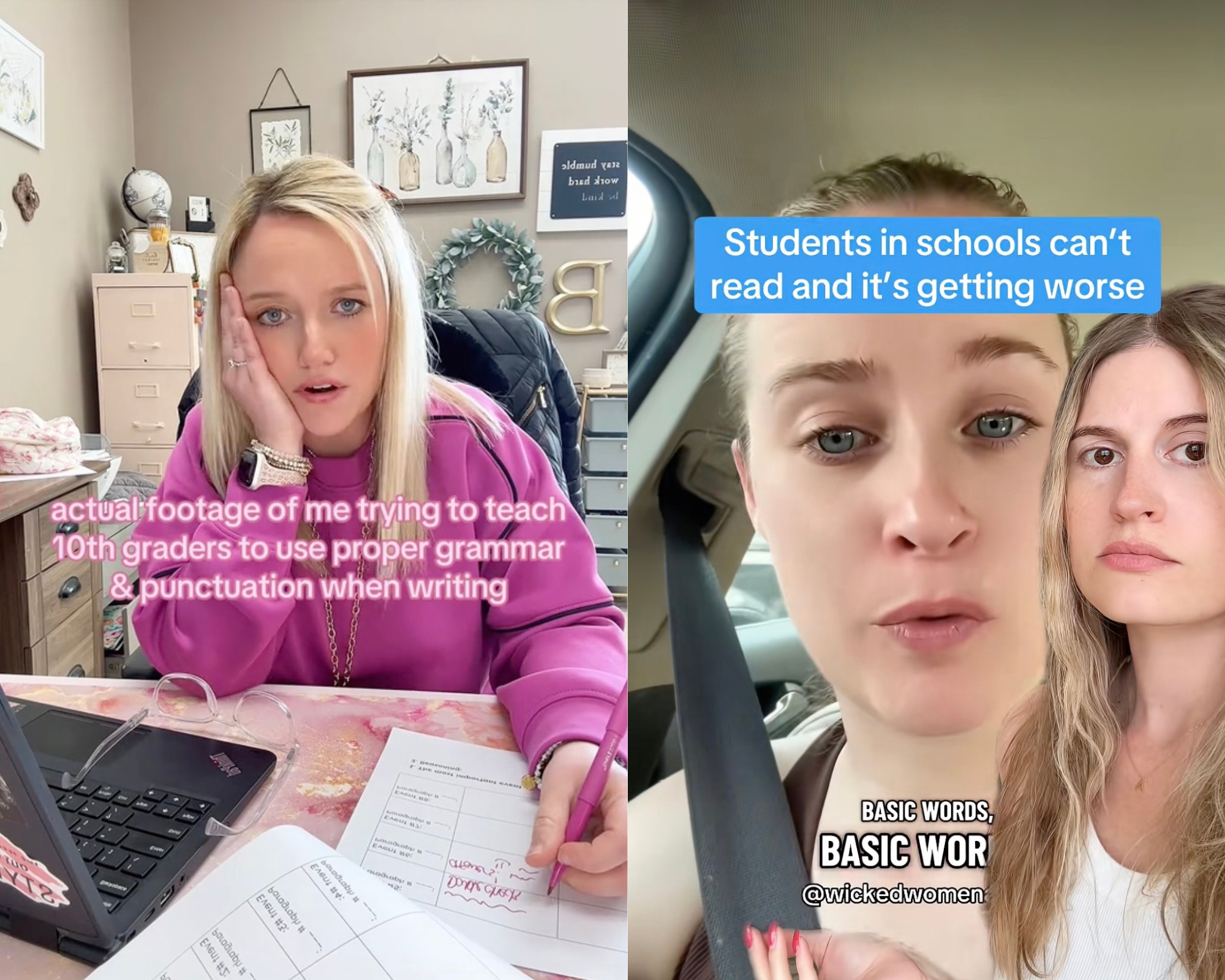
We’ve all seen the Instagram reels — teachers freaking out over seniors who can’t write a simple sentence. Although this scenario seems comical at first, real-life statistics show the concerning numbers behind the reel.
According to PBS News, daily reading for pleasure in the U.S. dropped by over 40 percent between 2003 and 2023. EdWorkingPapers and School Library Journals also cite uneven access to resources like libraries and the steady decrease of free time as predominant issues. But most impactful is the presence of digital platforms and short-form content. Constant scrolling trains the brain to seek constant stimulation and instant gratification — the opposite of what reading provides.
Artificial intelligence also plays a large role. Students can and have been using AI to bypass school assignments. When used responsibly, AI can be a helpful tool. However, instead of doing the necessary work of struggling through the learning process, students have been turning to AI to provide answers for them. This avoidance of engagement causes more harm than the initial accusation of plagiarism — it hinders vital developmental skills such as critical thinking, creativity and problem-solving. By relying too heavily on this technology, students become deprived of the ability to think for themselves — or even the confidence to believe that they can.
But what does this mean for students? The 2025 Program for International Student Assessment, or PISA, found that 15-year-old U.S. students’ reading scores fell 14 points from the last time the test was administered in 2022. Further findings from PISA indicate fourth- and eighth-grade reading scores worsened, with roughly a third of eighth-graders failing to hit basic reading benchmarks. Knowledge gaps left over from the pandemic also contribute to this issue.
Of course, a sharp decrease in the literacy rate negatively impacts more than just grades. The loss of learning proficiencies doesn’t only harm the individuals involved; it impairs society as a whole. Limited literacy could lead to a rising disinterest in civic participation, as many could fail to comprehend ballot measures, news coverage or even political debates. Moreover, limited literacy skills make it more difficult for people to identify bias, propaganda or misleading information in mass media, complicating how they make informed decisions about serious matters in society.
More concerning is what the lack of reading does to the human mind — it weakens attention spans and conditions consumers to seek short bursts of dopamine, depriving the brain of more thought-provoking information. This leads to a decline in cognitive ability, shown by how Gen Z is the first group reported to score lower on cognitive tests than their predecessors. And with AI, one can only feel concern for the future of human thinking.
A decline in literacy is changing the way rising generations not only learn, but also think, focus and interact with society. As technology becomes more central to everyday life, the ability to think critically, stay informed and engage meaningfully with the world becomes more important than ever.
This Could Be Your Sign to Ask Someone
Sarina Marzbani
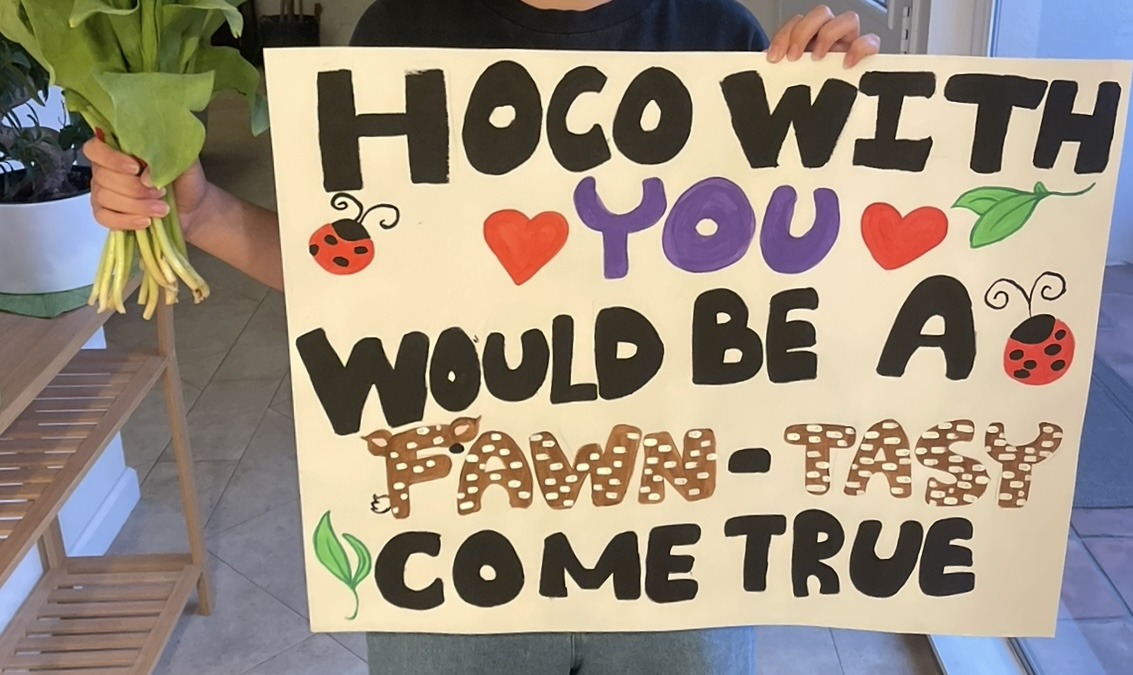
Photo Courtesy of Peyton Lucett
It’s Office Hours on a Tuesday in October, and you possibly just failed your biology quiz, leaving the DMS quad when you notice two groups approaching, centered around two people. One is holding a poster board and flowers. Someone’s trailing behind, filming in the most conspicuous way possible.
It’s a hoco proposal.
We know the drill once October comes around. For those who don’t, a hoco proposal is a creative way to ask someone to homecoming, usually with a handmade poster and a small gift. From on-campus proposals to the [insert your local high school’s name here] Askings Instagram page, they’re their own form of entertainment. You can spend an entire Office Hours session looking at signs for people you’ve never met or haven’t seen since elementary school, trying to decode references.
And honestly, that’s part of the fun. The best signs are rarely the ones that would make sense to anyone else. The great ones reference a favorite movie, a certain restaurant order, or something so oddly specific that you can immediately tell the person actually knows who they’re asking to homecoming. Being the poster recipient says, “Someone listens to you, knows the little things about you and made this sign just for you.” It’s someone turning what they know about you into something tangible.
While high schoolers may not get the grand declarations of love we see in movies, a hoco proposal is our own wonderful alternative: making someone feel seen. Maybe it says, “I’d be SADe without you at Hoco,” with the Best of Sade vinyl in hand, or “Hoco would be Din Tai FUNg with you” accompanied by a $25 gift card. (I have more ideas, so feel free to email me if you’re curious.)
Even if you’re shaking your head at those examples, it’s easy to admit that in a world where so much communication happens digitally, there’s something vulnerable about making a handmade sign and showing someone you thought about them. It may be awkward, but that makes it meaningful. Eventually, we’ll move on from OCSA, and these everyday moments with each other will become memories. Sometimes, those people we love deserve to know. So show them you care; however that may look, whenever you can. Remember their favorite snack and send them that funny TikTok.
You don’t need a poster board, flowers, or a perfectly timed crowd to make someone feel appreciated. Sometimes, it’s as simple as letting someone know you thought of them.
And if you are considering asking someone to homecoming, maybe take this article as a sign.
OCSA's Newest Addition: Introducing Dr. Williams
Jolie Benoit & Bella Chen

Photo Courtesy of the Orange County School of the Arts
As the school year begins, new members are joining the OCSA team. A recent addition to the OCSA campus is Dr. Heather Williams, dean of student culture and supervision.
Growing up, Williams was raised by a single mother and moved around California. Following high school, she attended Long Beach City College, but shortly after, she chose to enter law enforcement as a state peace officer. Four to five years later, she decided to continue her education in hopes of pursuing a career with predictable hours to spend more time with her family.
Williams recalled having a “fond memory of attending [her] grandmother’s classes” as a child. Her grandmother worked as a special education teacher, sparking Williams’ interest in education. She went to earn her bachelor’s degree in sociology from California State University, Dominguez Hills. After graduating, Williams began working as a special education teacher. She had never been in a classroom before, aside from the time she spent with her grandmother. Eventually, she earned her master’s degree in special education from CSUDH and later received her doctorate in educational leadership with a special education emphasis at Grand Canyon University in Arizona.
Today, Williams serves as OCSA’s dean of student culture and supervision. She highlighted that her previous position as a restorative practice specialist aligns closely with her current role. During her youth, Williams recalls never having a teacher to “lean on.” After frequently hearing her peers talk about the adults they could turn to, she realized she wanted to be that person for others. This experience shaped her strong focus on community and relationships.
Williams described her position as a “balanced role…built on [a] foundation [of] relationships, mentoring, learning and growing.” Through events such as Freshman Retreat and Jumpstart, she works to enrich OCSA’s diverse and welcoming culture. On the supervision side of her role, she recognizes that mistakes are an inherent part of being human, but views them as opportunities to learn. She remarked, “We can learn more from our mistakes than we think.” Although past actions cannot be undone, she takes a humanistic approach to behavioral issues and encourages students to maintain a positive outlook for the future. By “looking at the whole person” when addressing behavioral concerns and reinforcing each student’s place within the community, she hopes to foster a positive and inclusive environment, rather than one that pushes members away.
Williams’ first impression of OCSA actually happened a few days before the school year began at OCSA Jumpstart, an annual workshop for incoming students grounded in diversity, equity and inclusion activities. Reflecting on her experience, Williams revealed, “there wasn’t a day that went by that I wasn’t teary eyed … just watching everyone learning and growing.” She described feeling “so honored” to be a part of the Jumpstart program, specifically admiring its emphasis on relationship-building and community.
Like many new members of the OCSA community, Williams faced a few bumps while adjusting to OCSA’s unique campus. After getting lost on campus she remembers texting Abbe Levine for help. Williams said Jumpstart gave her the opportunity “to have [her] own orientation of the campus.”
Outside of work, Williams enjoys spending time by the ocean, in nature and with animals. She also has a dog named Cookie!
The New York Times Games Craze
Sienna Sprague
Graphic Courtesy of Nikki Bevacqua
If you have ever been in a middle school English class, chances are you’ve seen a kid slacking off and playing Wordle. Perhaps you were that kid, huddling with your friends to see who could win first. The New York Times Games are no new trend. Starting with standard crosswords, the company has managed to utilize games to boost its revenue and expand its audience. Its influence has reached people of all ages, from young children to teachers to grandparents. But how did this all come to be and, more importantly, what makes these games so appealing?
The New York Times Games’ first crossword puzzle was released in 1942. Its selection only expanded with the introduction of the Mini Crossword, Spelling Bee and a few others in 2014. While these games were incredibly popular, they would barely compare to the success of Wordle. Josh Wardle, a Brooklyn software developer, created Wordle in October 2021. The prototype managed to reach a vast audience through social media platforms. Its popularity caught the attention of The New York Times, which bought the app for over $1 million. With this new feature, along with the introduction of Connections in 2023, The New York Times Games was set for immense success.
Since their introduction, The New York Times Games has made millions of dollars in revenue. During 2024, The New York Times’ Games section possessed over nine million subscribers. In 2025 alone, their puzzles were played 11.2 billion times.
The games’ success can be credited to their refreshing and engaging nature. Despite having a diverse and large audience, the games lack ads or promotions. This sharply contrasts with the consumeristic culture the 2020s have brought. The games also manage to keep it simple yet engaging. Users are encouraged to think critically and methodically in order to succeed. Their ridiculous answers, while frustrating at first, require users to think outside the box. One might find themselves screaming from the difficulty but, in the end, shrugging it off and looking forward to the next one. The games have something special that keeps people coming back.
In an era where attention spans are shrinking and fewer people are thinking critically, The New York Times Games manages to combat these issues perfectly. Teens who spend hours scrolling stop to play Wordle. Adults tired from work make time for their daily round of Connections. Whether completed solo or with friends, the games are incredibly entertaining. The New York Times has built something impressive, with people across the country waiting to see what is next.
Fall Crazy in Love With Fall
Victoria Baek, Sophie Mansoury, & Jules Rau
Collage Credits to Ruby Lau
Although fall in Orange County isn’t exactly sweater weather, there are plenty of activities to do with your favorite people — for the homebodies, the thrill-seekers or the aesthetes all over OC. So cozy up, turn on the 10-minute version of “All Too Well” and get ready for an overload of fall activities.
We have Nov. 11 off for Veterans Day, and Nov. 23-27 for Thanksgiving break. The last day of conservatory is Dec. 10, so take a break from academic stress and spend time outdoors! We recommend going to the North OC Night Market in Anaheim to enjoy local street food and live music for $6. If you’re in for a little scare, starting Sept. 12 until Halloween night, the lights go down, the fog turns on, all the monsters come out and Knott’s Berry Farm transitions to Knott’s Scary Farm. Enjoy an immersive, thrilling experience mixing roller coasters with horror-themed attractions and scare actors. Similar to Knott’s Scary Farm, Universal Studios has Halloween Horror Nights from Sept. 3 through Nov. 1, adding thrills based on Universal’s horror features. The tram is hijacked, the houses are haunted and you’ll find characters all over the park, scarier than usual. You may even spot Nikki Freeman looking for her next Bear. For less pricey thrills, check out local haunted houses, like the Haunted Mansion Haunt in Lake Forest.
Or maybe scares aren’t your thing. If you’re still feeling outdoorsy, visit Oak Glen or the Julian Farm and Orchard. They offer apple-picking, a petting zoo and Instagram-worthy photo opportunities. In addition to apples, pumpkin patches are a great addition to your Instagram grid. Daily wagon rides are offered September through October at the Tanaka Farms Pumpkin Patch. If looking for an after-school activity close to OCSA, the MainPlace Mall hosts a free admission seasonal event, with a petting zoo and selection of pumpkins.
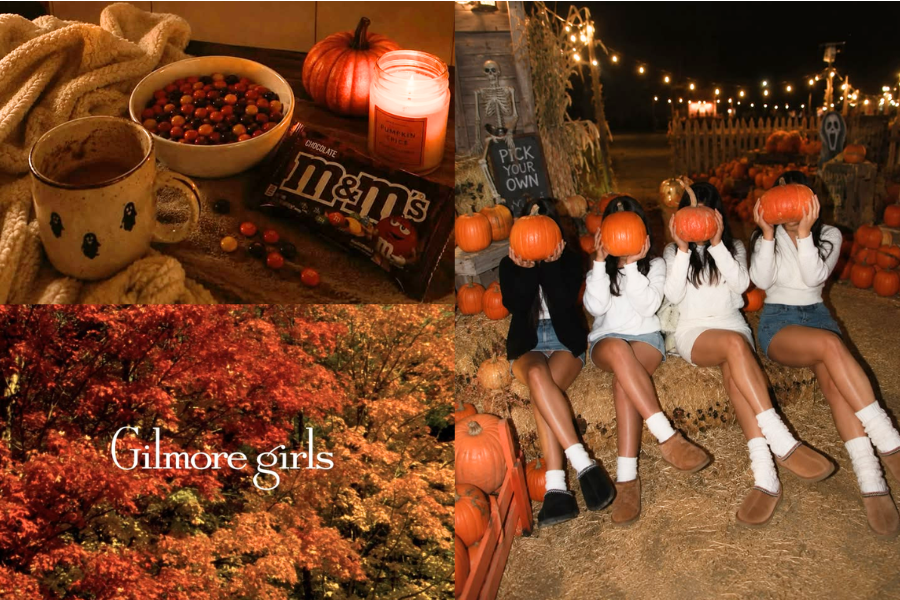
A cozy night in with friends can be a good alternative when the weather doesn’t permit outdoor activities. Enjoy a movie marathon with some fall favorites, including “Hocus Pocus,” “The Fantastic Mr. Fox” and “Casper.” Turn on an episode of “Gilmore Girls” while baking a seasonal treat — pumpkin bread, cinnamon rolls or even Julia’s fudge brownies!
Finally, don’t forget to check out the events we have here on campus! Every fall, P&D and A&E put on their annual student-produced Halloween Maze, with student actors hanging upside down in a Ghostface mask. On the opposite side of school, the Annual Painted Pumpkin Auction by the VA students excites not only classmates who get to see it in the Tower Lobby, but also aesthetes who crave artsy pumpkins. Interested in listening to plays? Act or write a short Halloween-related play for Scarefest, created by CW teacher Mr. Frost!
Fall in Orange County has something for everyone, so grab your friends and make some memories before we start counting down the days until winter break!
Your Next Potluck Offering
Julia Hernandez
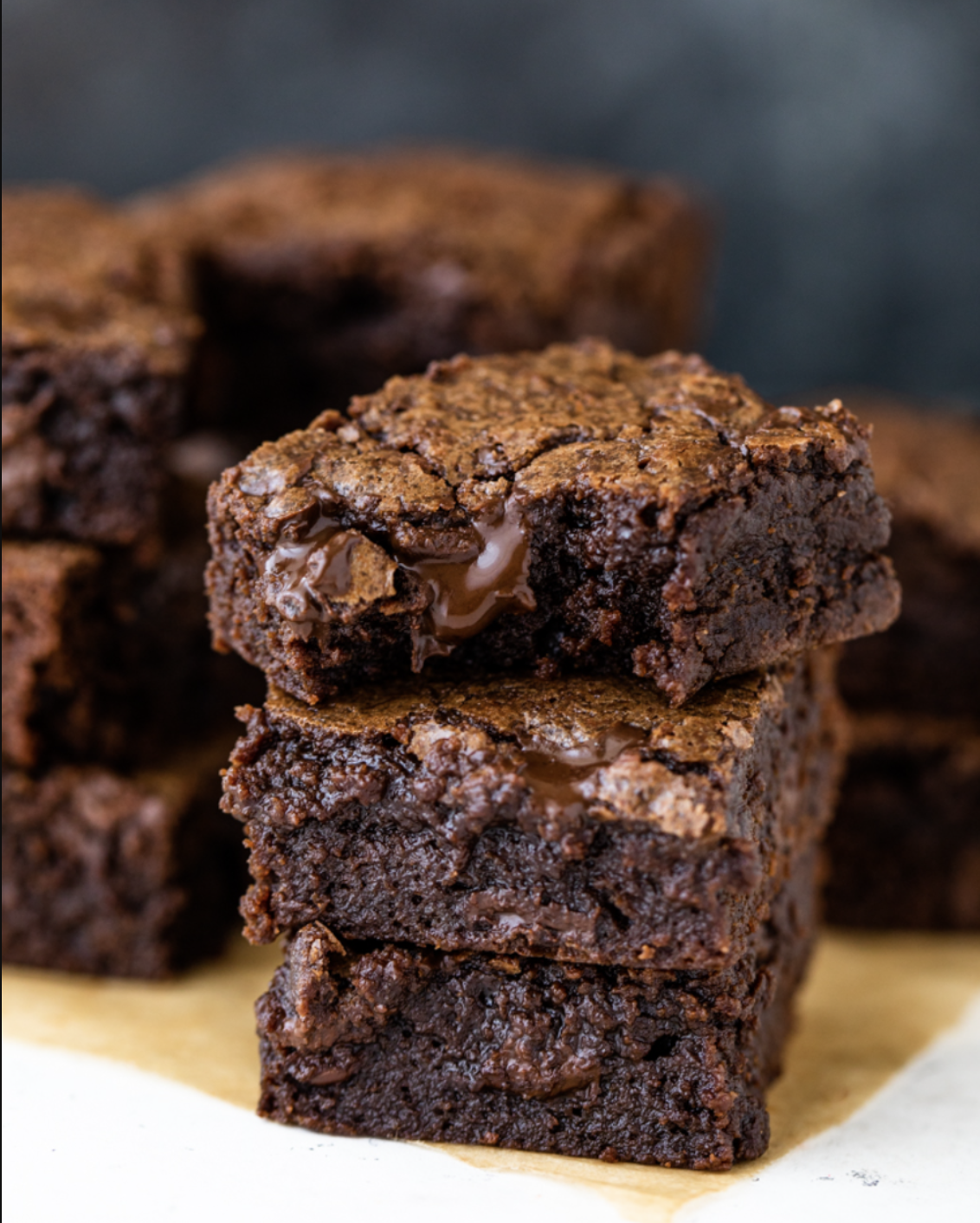
Photo Courtesy of Layla Atik
Do you have an upcoming potluck, but no idea what to bring? Well, here’s a recipe you need to try: Fudgy, crunchy-top brownies. Pulling up with these fellas? The pan will be empty by the first hour of the function.
Before anything else, preheat your oven to 300°F. PLEASE make sure there aren’t any extra pans in your oven.
Melt five tablespoons of butter in the microwave and mix it with 1 ¼ cup of sugar. You can use margarine instead, but note that the brownies will come out with a cake-like texture rather than a fudgy one due to the lack of fat from the butter.
Once mixed, add three eggs, one teaspoon of vanilla extract and ⅓ cup of vegetable oil. Mix with a whisk.
In a separate bowl, whisk together your dry ingredients: ¾ cup of cocoa powder, ½ cup of flour, ⅛ teaspoon of baking soda and ¼ teaspoon of salt.
Little by little, add your dry mix to the main bowl, mixing it with a spatula as you pour it in. By folding it with a spatula rather than a whisk, you’re ensuring that the mixture doesn’t get over-mixed and runny.
After evenly combining the wet and dry ingredients (don’t forget to scrape the sides), add in your semi-sweet chocolate chips. When it comes to chocolate chips in this recipe, I typically measure with my heart. But for specificity’s sake, I’ll say one cup of chocolate chips.
Now it’s time to bake!!
Begin by lining a 9x9-inch square pan (or a 9x2 round pan) with parchment paper or aluminum foil. Spray or spread oil over the surface and pour the mixture in. If the recipe went according to plan, the batter should pour slowly and need a little extra scraping with your spatula. Pop it into the oven and set a timer for around 20 minutes. After these 20 minutes, you can check on the brownies with the toothpick test — if it comes out covered in batter, it’s not ready; if it comes out with a little tiny bit of batter and crumbs, it’s perfect; if it comes out completely dry, it’s overbaked.
Once you feel it’s ready, take it out of the oven and let it cool on the counter before serving. Now, you’ve got something to take to any function ever! People will love it, cause everyone loves brownies.
The Summer I Turned Employed
Sara Bradeich
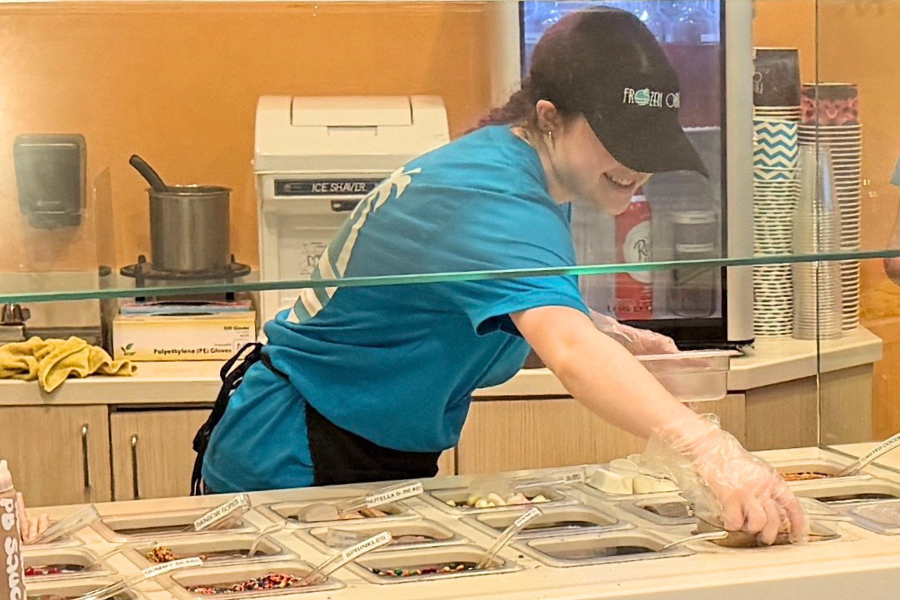
Photo Courtesy of Abby Bradecich
These past few summers, my parents have been pushing me to get a job. They tell me that I need to find something to fill up my time — that I can’t just lie around all summer like a typical plot in a miscellaneous Disney Channel episode from the 2010s. So, I’ve spent countless hours volunteering with animals and kids. Never had I ever taken the plunge into getting a real, paying job. Until this summer. It’s no longer Disney Channel; it’s more like Amazon Prime Originals. It’s the summer I turned employed.
This summer, I finally started applying for jobs and landed a role in the front-of-house staff at my local frozen yogurt spot. I do have to admit there was some nepotism involved, and no LinkedIn accounts were necessary. When my sister was in high school, she had the same job, so I can guess that my interview was heavily influenced by their established relationship with her. Shoutout to you, sis!
I was very nervous before the interview, so I made my dad ask me questions to help me prepare. When I finally got there, I felt a little more confident — having a vague idea of what my answers could be to the potential questions. However, when I finally sat down with the interviewer, she asked me to tell her a little bit about myself. I gave a short answer that I now realize was probably not my best work. But, I was asked no further questions and got hired on the spot, so I must have done something right!
Now, this is not a testament to my amazing interview skills, but it speaks more to how my boss operates. She very much works off vibes and energy rather than actual skill or work ethic. This does show sometimes in her choice of employees, as the person they hired after me only maintained the job for around two weeks.
I, however, have been holding strong for almost two months and LET me tell you: now that senior year has begun, I feel like I have no time for anything other than work or school. It’s not like I can truly complain; I only have three to four shifts a week. But going from doing nothing all day to actually having human responsibilities is exhausting. Especially since those responsibilities include talking to people. For that, I’ve developed a basic script for how conversations usually go. Though, when a customer goes off script, you will unfortunately catch me stumbling over my every word. Especially when I'm working a night shift after a long day of school and start interactions by asking customers if they want their receipts.
In the end, though, I am having a lot of fun making connections with my regular customers and co-workers (and, of course, earning money isn’t too bad either)!
OCSA Comic
Scooter Beaudoin
Art by Scooter Beaudoin
Why You Should Start a Blog
Asmi Aggarwal
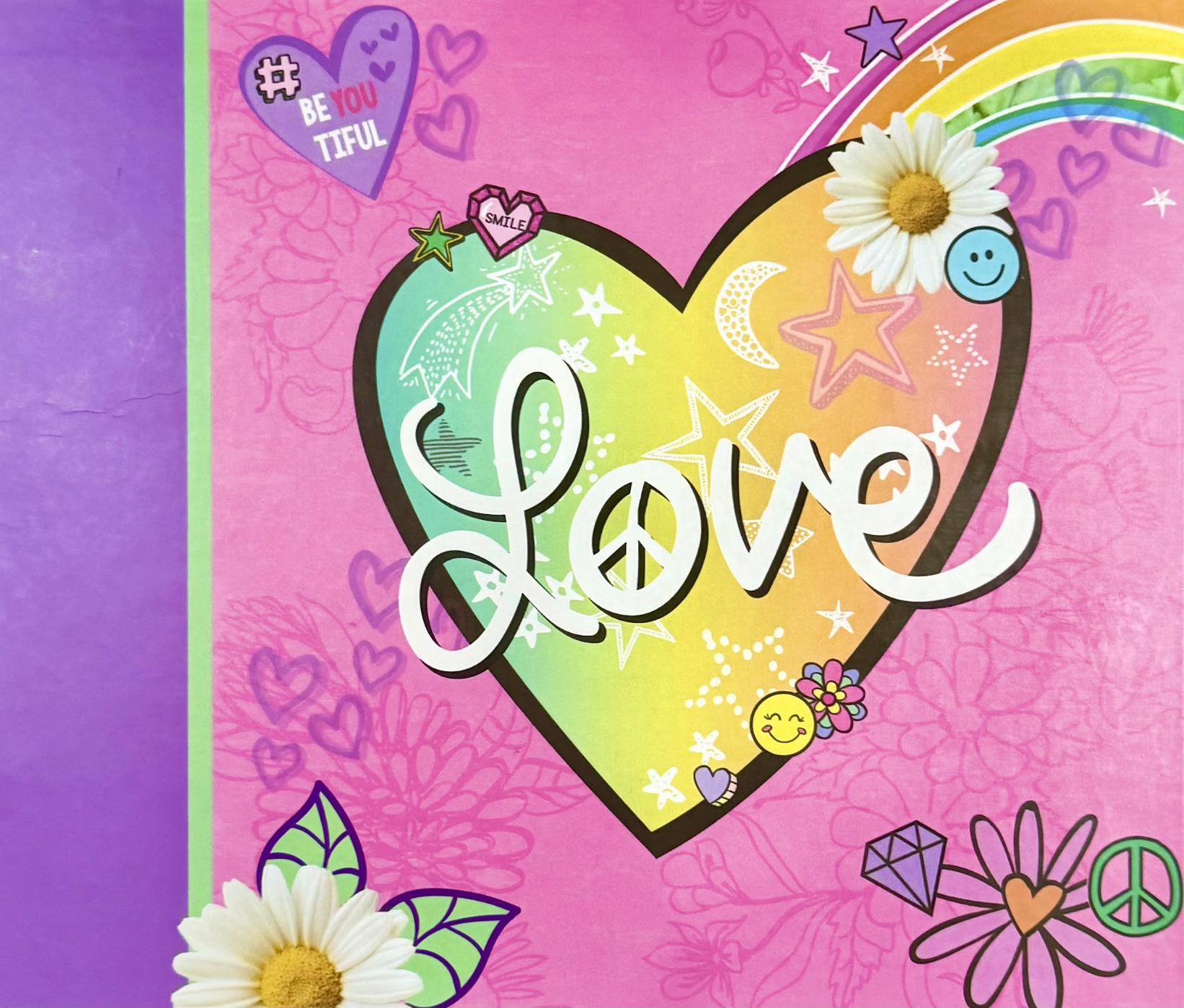
Photo Credits to Asmi Aggarwal
The first time I tried to keep a journal was in the third grade. For Christmas, my babysitter gave me a bright pink scrapbook with the word “love” inscribed inside a rainbow heart on its cover, and I filled its pages every day for about half a year. I wrote about the latest school drama, my weekend plans, complaints against my younger brother and everything else under the sun. Then, one day, I stopped.
In middle school, during COVID and my angsty tween era, I tried again. I loved putting my thoughts somewhere outside my head, but I was never consistent. Even though I was the only one who would ever see my entries, I sometimes felt embarrassed by them. Writing down my thoughts made them feel too real.
Then, in junior year, I stumbled across a random girl on TikTok raving about a strange app called Substack. Looking for a distraction from midterms, I downloaded it. I had no idea what I was doing, but I made an account, called my blog Beneath the Cherry Tree (shameless self-plug) and started writing.
Somehow, it became something I looked forward to rather than something I kept abandoning. I began publishing poems, essays, random notes and whatever else I felt like writing. I was also much more open than I had ever been in my private journals. Which is strange, because now, technically, other people can actually read what I write.
But I think that’s part of what makes it work. I’m not forcing myself to write for an audience; I’ve simply stopped caring about who sees my posts. Beneath the Cherry Tree feels like my own little corner of the internet: a place where I can be serious, silly, sentimental or completely nonsensical without having to explain myself. Blogging has helped me move beyond the idea that I have to journal for the sake of my mental health and discover that writing could be something I genuinely enjoyed.
In the 2000s, blogs were everywhere. People wrote about their lives, interests, opinions and latest obsessions. The internet seemed less concerned with performance and more interested in just allowing people to exist. You could follow someone because you liked the way they thought, not because they were the most aesthetic person ever (well, maybe that did play a small part).
Today, so much of what we consume is designed to be scrolled past. We spend hours perusing Instagram reels and looking at other people’s lives, but comparatively little time making something of our own. A blog offers a different kind of participation: active thought.
And I think that is part of why the recent popularity of “girlblogging” is so interesting. The term has become a recognizable internet aesthetic: “whimsy,” nostalgic and often accompanied by carefully curated images, literary references and a specific kind of femininity. There is nothing inherently wrong with that. In fact, I LOVE myself a cute girlblog. But sometimes, the more a trend is packaged as a way to be unique, the less unique it really becomes.
So, instead of just calling yourself a girlblogger, why not actually make a girl blog? Make it pink or blue or covered in pictures of things you love. Write about your favorite books, your worst days, your latest obsession or something you’ve been thinking about for weeks. You can make it beautiful, but you can also make it strange. You can be “whimsy” without coming across as performative (I know you have it in you!).
That, to me, is what makes blogging so much more interesting than mindlessly consuming content. You are making something that could not have existed without you. I think that’s a pretty good reason to start!
The Death of Subcultures
Lani Masaki
At a school renowned for having unique, artistic students, everyone can end up looking surprisingly similar — even those under the “alternative” label. When seemingly anyone can now be “alternative” just by buying a band T-shirt off SHEIN and painting their nails black, what actually makes someone “alternative”? What makes them emo, punk, scene, preppy or hippie?
Subcultures that were created specifically to exist outside the mainstream are no longer niche, instead being reduced to merely the clothes someone wears. When a subculture is simplified into an aesthetic, the beliefs, values and social context behind it get lost. The personal meaning behind why someone may have chosen to join a subculture or community outside of the norm is completely overlooked. When symbols of a subculture become more popular than the reasons behind it, people begin to participate in the appearance of a culture without participating in its meaning. A major cause of this is undoubtedly the internet. Global connectivity jumpstarts massive trends that anyone may see on their For You page and decide to copy. Something once viewed as “different,” carefully kept within one community for its symbolic significance, may suddenly appear everywhere with just one upload that starts another microtrend.
Take, for example, the studded belt. Originally, bikers who had to develop creative methods of self-defense used metal-adorned belts as a form of self protection, with the belts sometimes doubling as a weapon. They were later adopted by metal and punk cultures as an anti-fashion statement because of their unique appearance and intimidating aesthetic. Once the emo subculture began branching off from its punk counterpart, the belt transitioned with them — serving as a homage to the harder styles of its music and fashion. Now, it’s seen in every Hot Topic and Target, being sold in mass quantities by fast fashion and dropshipping companies like Temu and Amazon. And with fast fashion brands capitalizing perfectly on these ever changing “product of the summer” or “don’t walk, run” items, cultures become commercialized and fitting into those cultures becomes the product. Ironically, most alternative subcultures were born in the first place to rebel against capitalism and established structures of power.
If we buy into aesthetics so much that they encompass our identity, what will we make of ourselves if we simply wear something else? Identity has shifted from internal self-recognition to external performance. The trending desire to look “different” can distract us from the actual meaning of being different, unique or rebellious.
Instead of questioning what aesthetic you fit into, perhaps question why you were drawn to it in the first place. Dress a certain way, pick up a hobby or use particular slang not because it’s what will socially validate you, but because it personally validates you.
What's Your Halloween Costume?
Julia Hernandez
During Fall, OCSA students can finally say that it’s time for their favorite holiday: Halloween. With the spooky season just getting started, costume plans have become an exciting topic for everyone. In discussing Halloween costumes, Evolution has organized three categories:
The Pop Culturally Relevant: The name is self explanatory, but these are inspired by pop-culture moments from the year — movies, memes, viral videos etc.
The Classics: These are your Elvis Presleys, traditional superheroes, ghosts, corset-and-miniskirt princesses etc. These archetypal costumes are Halloween staples. No matter what, everyone knows what you’re dressed as.
Personal Projects: Unlike the aforementioned, these costumes don’t follow trends. This costume may be a character from a movie or video game, for example. Now, this doesn’t mean that personal project costumes are exclusively made up of specialized, unique ideas — it simply suggests that the costume was executed regardless of the hot topics during the year.
With the categories established, here are my predictions:
The Pop Culturally Relevant:
Michael Jackson — With the release of his biopic in April of this year, I conclude that this timeless costume is going to skyrocket in popularity this Halloween.
Jean Grey — This summer, Sadie Sink’s role as Jean Grey in “Spider-Man: Brand New Day” was the first time in nearly 10 years that audiences got to see the character on the big screen. It’s no doubt that people may be inspired by Jean’s comfortable look from the movie.
Nikki and Bear — While seemingly a bit tone-deaf given the themes of the movie, it wouldn’t be the first nor the last time a couple dressed up in such costumes. With the fame that “Obsession” has gained since its release, anything is possible.
The Classics:
Corset + Miniskirt Princesses — This type of costume is a bit controversial; it’s often called unoriginal or uncreative. Taste is subjective, and it’s a popular costume for a reason – it’s cute and practical. Not everyone is looking to carry around a giant prop all night and there’s no shame in that.
Corpse Bride — Emily from Tim Burton’s “Corpse Bride” has become a Halloween staple since the year it came out – that momentum does not show signs of stopping. Year upon year, hundreds of people upload posts of their personal interpretations of the character’s look; this year will be no different.
Batman — He’s Batman. C’mon.
Rather than predicting Personal Projects, I have compiled a few costumes that I think would be unique and fun:
Aika from the indie series “Pretty Pretty Please I Don’t Want to be a Magical Girl” — That color palette is to die for.
Apple White from “Ever After High” — She’s traditional, the people’s princess and an absolute mess.
David Bowie. In ANY era.
Whether you draw your inspiration from pop culture or do a spin off of a classic, Halloween is an ever changing holiday and the people celebrating it — especially those at OCSA — have the power to make it their own no matter who they decide to be. So go on, dress up as Spider-Man or cosplay your favorite manga character — it’s Halloween!
Iced Coffee isn't Dinner: Here are the best eats in OC
Camila Acevedo
Every day at around 4:45 p.m., the same thing happens. The bell rings, everyone spills into The Lisa Argyros Commons and within two minutes, someone pops the question: “Where are we eating before rehearsal?” Your caffeine-addicted friend is holding an iced coffee, the designated driver is already pulling up Google Maps and two people are straight-up arguing over whose favorite spot is actually better. Just like clockwork.
Honestly, trying to figure out food between class and rehearsal is annoying enough without spending your Office Hours scrolling through Yelp. So, to save everyone from the back-and-forth, here’s a list of actual go-to spots around OC that just work. Plus, you can DoorDash all of them straight to school if you’re stuck on campus.
Santa Ana
Artist’s Village Cafe: If you need somewhere quiet in the downtown arts district, this is perfect. They are known for a calm, vintage vibe, deep local music ties and plenty of vegan and vegetarian options. People go for the string-lit patio and comfort food that actually feels handmade rather than mass-produced.Orders to try: Iced Horchata Latte, a warm panini or the Starving Artist (creamy tomato soup paired with a classic grilled cheese)
Santos Pizza: When everyone is starving after a long event, Santos can be your new default. They are known for their generous toppings and thick, airy crust that doesn’t get soggy under a ton of cheese. People keep going back for the cheese-pull and the golden, crispy wings when they need food for a group.Orders to try: Double Pepperoni Pie with Mango Habanero Wings
Hammer Burger: For a solid burger, this is the best nearby option. People call it a smash burger because they press fresh beef right onto a flaming grill with paper-thin shaved onions. That process creates lacy, crispy edges that lock in the flavor, which pairs with melted American cheese on a soft potato bun.Orders to try: Classic Double Smashburger with a side of Sweet Potato Fries
Old Towne Orange & Beyond
The Taco Stand: A reliable option during weekend breaks or gaps before an evening event. It mimics the feel of a classic Tijuana street stand, complete with hand-pressed corn tortillas made right in front of you. The al pastor is shaved straight off the vertical trompo spit, mixing smoky meat with sweet grilled pineapple and guacamole.Orders to try: Al Pastor Taco
Costa Mesa
Folks Pizzeria: Good for late nights after performances or weekend hangouts, Folks is easily one of the top pizza places in the area. They use a natural sourdough fermentation process that creates a chewy crust with wood-fired char spots. The sweet-and-savory mix of garlic cream and hot honey over savory meats is what sets it apart.Orders to try: Sourdough Pie with Hot Honey & Pepperoni
Sidecar Doughnuts & Coffee : Located right on 17th Street in the heart of Newport Beach which works well for a quick dessert after a long day at the beach. Sidecar stands out because they fry fresh batches from scratch every single hour, resulting in a dense, cakey texture with real-fruit glazes that don’t taste artificial.Orders to try: Huckleberry Cake Doughnut
These places saved me so many times and, coming from a culinary student, they meet the standards. The next time 4:45 p.m. rolls around and you hear arguing in the commons, just pick one of these and go eat before rehearsal starts.
The Seven Deadly Sins of a High School Student
Joey Zhou
It’s the time of the year when we willingly invite monsters into our lives. Thinking about it, we don’t need costumes or decorations. We live with seven deadly sins.
Thousands of years ago, they were considered threatening to the human soul. In our school lives today, they mostly threaten our GPA. Which, honestly, to many, that’s scarier than anything.
I. Pride
The vampire of all sins. It’s opening your textbook the night before a test thinking I’ve got this. Refusing to ask questions because you’re “pretty sure” you understand. Announcing “I didn’t study” to a room of people who didn’t ask.
Pride is believing you can defeat time. The overconfidence says it all.
II. Greed
It’s the kid going door to door with a pillowcase, and not a bag, because a bag has limits. Why join three clubs when you could join seven? Why one leadership title when you can have four? School has become a collecting competition for your résumé, and we all collect extracurriculars and APs like fun-sized candy — convinced the next will finally fill the pillowcase.
Eventually, there are no hours left in the day. Greed lives in the vending machine though, fangs out.
III. Envy
Someone’s costume clearly took weeks of work. I’ve worn the same for years. Higher grades. Bigger awards. More talents. A whole plan for competitions and classes. I’m still trying to remember what homework is due tomorrow.
Envy makes everyone’s reflection look more put-together than yours. We’re comparing our behind-the-scenes to someone else’s highlight story.
IV. Wrath
The group project partner who’ll “get to it tonight” but never shows. It’s Google Classroom timing out mid-submission, the printer jamming, or pop quizzes on information you never retained.
Rarely anything big, but it’s shockingly easy to believe the universe has personally cursed you.
V. Lust
Forget romance. The true desire of a high school student is freedom. It haunts us. Praying for time to pass faster, the final bell, a sleep without an alarm.
We spend weeks lusting for the next escape, wondering with anguish, just like spirits who can’t remember why they’re still wandering the halls.
VI. Gluttony
It’s the unattended candy bowl with the “just take one” sign. One more candy. One more video, designed by smarter people to ensure it is, in fact, never the last.
We consume everything. Except, conveniently, assignments are still patiently waiting to be gluttony’s true survivor.
VII. Sloth
Sloth is the week-old jack-o’-lantern: caved in, a little moldy, but still sitting out because nobody committed to throwing it out. Later becomes after dinner. Then after another episode. Then tomorrow, which was supposed to be today, and yesterday.
Suddenly, it’s midnight: the lights are off, the candy bowl is empty and the assignment that existed peacefully for two weeks has transformed into a full-blown emergency.
Maybe being a high schooler isn’t countering every sin. Maybe it’s recognizing the monsters before they become personalities.
Or maybe I’ll figure it out tomorrow. Actually … 12:18 AM. Boo.
Slow Walkers, Stay in Your Lane!
Ella Paulsen
Most babies learn to walk at around 12 to 15 months. However, based on the things I’ve seen in the OCSA hallways and staircases, I think it’s safe to say most high schoolers are still learning to master the skill. I’ve been told by all of my friends that I am an incredibly fast walker, so it’s no surprise that my biggest pet peeve is slow walkers. Unfortunately for me, I go to OCSA, where we have seven floors and snail-like students.
After four years at this school, it never fails to amaze me how little thought students put into moving through the campus. People think the best place to greet and hug their friend is in the middle of the hallway, while expecting everyone to just wait as they catch up on their weekend. The staircases are horrific — people climb right in the middle, cut the line and push others. So, here is some advice I have in order to make fast walkers (myself) hate you a little less:
If you are a slow walker, walk to the right or left side of the hallway. It really doesn’t matter which side, just don’t stroll in the middle where it’s impossible for people to go around you.
When coming down the staircase, don’t cut and go to the left side. Contrary to what you may think, your time is not more valuable than anyone else’s. Everyone has to stand and wait for the stair traffic, so you can too.
Don’t make clusters of more than two — maybe three — people. I’ve seen friends line up in groups of five or six, spanning the whole hallway. This is extremely frustrating because it makes it impossible for students to walk around you, and these friend groups are usually the most sluggish walkers that will chat forever.
Please don’t be on your phone in the hallways. If you can walk fast while looking down, that’s fine with me, but usually a student will be looking down and walking slower than a tortoise. You can look at your phone when you have arrived at your destination.
Lastly, just be a considerate walker. If you need to stop and say something to someone, pull off to the side and let people pass you. Put your phone in your pocket. Wait patiently for your turn. I understand not everyone is a naturally fast walker, but that doesn’t mean you can’t be kind and thoughtful when hiking to class.
Hopefully, you’ve learned about how you can avoid being an obstacle and how to make someone’s path to class a little easier. I just really hope you didn’t read this article in the middle of the hall, blocking the way.
Can't Spell "Costume" Without "Cost"
Ariel Mualim
One person’s trash may be another person’s treasure, but Halloween leaves behind plenty of both. OCSA Halloween is the school’s sacred tradition where students craft cardboard props, construct remarkably detailed cosplays and show off their creations at OCSA’s costume competitions.
From trick-or-treating to carving jack-o’-lanterns to decorating porches with cobwebs and inflatable ghosts, Halloween traditions have not changed much over the years. According to the National Retail Federation, Americans spent a record of $13.1 billion, nationally, last Halloween on costumes, candy and decorations.
However, Halloween spending comes at a cost most people are unaware of after the holiday has passed. According to Hubbub, a charity in the United Kingdom, approximately 69 percent of Halloween costumes are made of oil-based plastics such as polyester. These materials can take between 20 to 200 years to decompose, meaning that a costume worn for a single night may last longer than the person who wore it. In total, the waste from these costumes add up to 2,000 tons annually, which is the equivalent to 83 million plastic bottles. Much of this comes down to how costumes are treated compared to everyday clothing; they are designed and bought for a single night, then discarded or forgotten as soon as November arrives — leaving little opportunity for recycling.
In addition, waste from pumpkins makes a dent in the environment’s health. According to ZME Science, an online science news publication, over 1.3 billion pounds of pumpkins produced in the United States every year are thrown into landfills where they release methane as they rot. Unlike costumes, pumpkins are biodegradable, so it’s important how they are disposed of. If composted, pumpkins break down cleanly and serve as fertilizer for other plants.
Lastly, while candy waste may not seem like a concern, it’s actually one of the most intense waste issues to solve. In 2024, the Ocean Conservancy’s International Coastal Cleanup — the world’s largest volunteer cleanup — collected over 1.4 million food wrappers, including candy wrappers. This issue involving the disposal of candy wrappers is largely due to their composition, which is a mixture of plastic and foil that is hard to recycle; so once the candy is eaten, the wrapper becomes trash by design.
On a brighter note, there are many convenient ways for people to reduce and recycle Halloween waste. OCSA’s costume competitions already show that students are capable of resourcefulness and creativity. Building an impressive project from scratch proves that reducing waste through reuse is possible. But not everyone needs to become a master at cosplaying or design to help. Something as simple as composting jack-o’-Lanterns, recycling Halloween materials for next year or donating old costumes and candy would already be contributing to the reduction of Halloween’s environmental footprint.
All in all, Halloween will forever hold a special place in our hearts, especially at OCSA. The environmental toll of this celebration is real and worth acknowledging, but so is how little it takes to lower it. Whether a costume was received from Amazon a day before Halloween or whether it was carefully crafted for months in advance, what happens to materials and decor after the festivities is what matters most. Any small change in habit can reduce the environmental harm of a beloved holiday. Happy Halloween!
This Article Is Kinda Chic
Rosie Greenwood, Esme Lee, & Rhea Kolapalli
Social media users have found their new obsession: overusing popular terms to express themselves.
The two main victims of this trend are as follows: “niche” and “chic.” From users calling their favorite things “niche” to posting videos with text on the screen saying “(blank) is chic,” these words have become unavoidable when scrolling through social media. The terms have little meaning anymore; they’re buzzwords that get clicks and attention. As social media starts to turn every idea into a trend, one can only wonder what word will lose its meaning next.
First up, and one of the longest-lasting: “niche.” We’ve all heard it too many times, whether someone’s calling us all basic or telling everybody who their favorite supposed “underrated” artist is. But what does being niche even mean anymore? Originally, the definition of something being niche is when it “appeals/belongs to a small, specific group of people rather than a large, mainstream audience.”
However, this label has turned into somewhat of a competition. While social media’s — and, in turn, people’s — love of being “niche” is not inherently bad, it may have turned out that way. Rather than using the word to describe a specialized job in AP World or to put people on to a lesser-known song, we’ve begun using it to make ourselves feel better than others. Why is it shameful to like an artist with 20 million monthly listeners instead of 5,000? Or to go to Starbucks instead of your local spot “nobody’s heard of”? And because of society’s obsession with being niche, we’ve labeled almost everything as such. But when everything is niche, is being niche even niche anymore?
Once upon a time, “chic” simply meant stylish, elegant and fashionable. Now, scroll through social media, and after five minutes, everything is chic. Re-wearing an outfit? Chic. Eating toast? Apparently, chic. The word has become social media’s favorite accessory, attached to anything to make it cool.
I scrolled through TikTok one morning, and to my surprise, the first video was about being chic. However, instead of rambling on about how wearing a white shirt and jeans is supposedly chic, the influencer was criticizing the trend. She explained that to be chic, you can’t call yourself chic. Chic is supposed to be unattainable, rare and effortless. Once everyone starts labeling themselves that way, the word begins to lose the meaning that made it popular in the first place. It’s a very familiar cycle on social media.
At the end of the day, social media users will always take new trends and run with them — wearing their meaning into something unrecognizable with every post uploaded. There’s a ridiculously high chance that in a few months, everyone will be raving about a new term they found off TikTok, deeming “chic” and “niche” as cringe and leaving them to be forgotten. So, the next time you go to tell everyone about how you found your new “niche coffee spot” in Irvine, maybe reconsider your word choice before hitting post.
The Squishy Epidemic of 2026
Camille Huang
Going to College with Jeri Stein
Aidan Lindsay
This article is not written by Jeri. Sorry to all who believed it would be, based on the title — but Jeri graduated last June, and if you didn’t catch that by October, then, well … I guess you weren’t a true Jeri fan. However, with the advent of technologies like Zoom (what a relic!), I have transported her back to Evolution. The excerpts presented are Jeri’s words verbatim, taken from my interview with her on September 11th — focusing on her experience of going off to college.
“Hi, I’m Jeri Rose Stein, I was in the class of 2026, I was in Acting, and now I’m at Emerson College for Comedy Writing.
Emerson is just OCSA part two. Do you know I have to take the stairs? I get deja vu. My opinion on Emerson is that it’s actually the best. I’ve been having the greatest time here. If you like the arts — if you truly love art — then this is where you need to come. You think at OCSA that people are into art, but as you go up in the years, people start going ‘Oh, I want to go into Finance — I want to be an accountant’ … something like that. But when you’re here, everyone is engaged. Everybody wants to try out for things. Everybody wants to write with you. I’m filming a sketch with this guy tomorrow. It’s my second week here, and I’m already doing stuff like that. Now it’s like, real — if you’re here for film, you want to be a director. That’s the thing here — OCSA prepares you perfectly for this school. It’s very similar to OCSA; it’s smaller and so dedicated to the arts — it’s just perfect.
When I came to OCSA, I didn’t know what I wanted to be. Let me let you in on a little secret — I wasn’t always funny. I was kinda funny. But when I first started to get into acting and received comedic roles, I realized ‘I’m good at this.’ When I first joined Unleashed Freshman year, I remember writing sketch, and it just came so naturally. I would write, and I just felt like I knew what to do. I remember Mr. Wood came up to me and said ‘Jeri, I’m so excited you’re a freshman! When I was reading [your sketches], I thought you were a senior.’ I was like, ‘Well, you’re gonna have three more years of me.’ Being in my conservatory made me realize that this is the place for me. Why not do it in such a specialized field? Writing Deep Thoughts with Jeri Stein actually changed my life, in a way. It made me realize that I love writing about life. Evolution was such a great way to get into that field, too. OCSA gives you such a great outlet to let out everything creatively.
When people say ‘Jeri Stein’ in the hallway, I want them to remember me as somebody who was engaged in my art throughout all of high school. [When I told people] I’m going to school for comedy, everybody went ‘yeah, that makes sense.’ I want to be exactly who I think myself to be. I definitely made some waves at OCSA, stuff like OCSA Unleashed — is that still happening? Fly high. Anyways, I want people to know that I was driven, but also funny. My most important key qualities.
Dream big. That’s my biggest advice for everyone at OCSA; the dream is real. Everything in life is temporary. Just know things will pass, like all things do.”